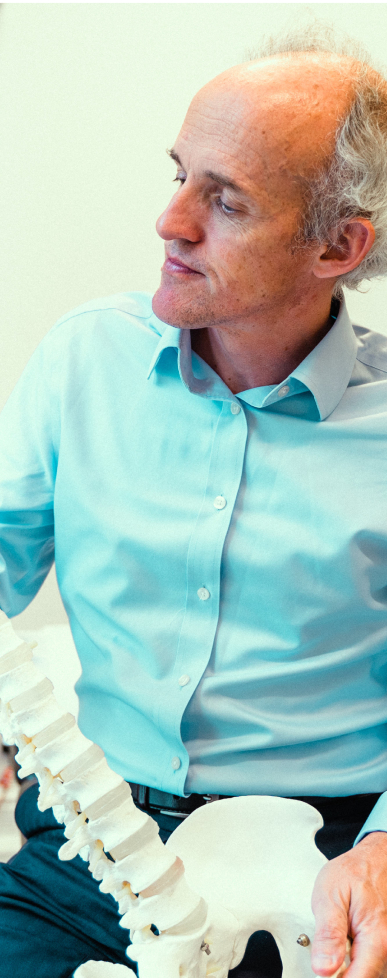
Cauda Equina Syndrome
I’m often asked what is Cauda equina syndrome? This condition (often abbreviated as CES) occurs when the bundle of nerves at the base of your spine becomes severely compressed. Unlike ordinary back pain or sciatica, this condition can lead to permanent paralysis, loss of bladder and bowel control, and sexual dysfunction if not treated within hours. Understanding the warning signs could mean the difference between walking out of the hospital and facing lifelong disability.
Overview and Why Rapid Treatment Matters
Cauda equina syndrome represents one of the most time-critical emergencies in spinal medicine. When the spinal nerves at the lower end of the spinal cord become severely compressed, the clock starts ticking. Every hour of delay increases the risk of permanent nerve damage that no amount of surgery can reverse.
Consider this scenario: A 43-year-old office worker bends to lift a heavy box and feels a sharp pop in their lower back. Over the next few hours, they develop severe pain radiating down both legs, notice numbness spreading across their inner thighs and buttocks, and realize they cannot urinate despite a full bladder. This is not a situation for scheduling a doctor’s appointment next week—this requires emergency hospital admission within hours.
Why CES is a medical emergency:
- Permanent leg weakness or paralysis can develop if compression persists beyond 24-48 hours
- Bladder dysfunction may become irreversible, requiring lifelong catheterization
- Bowel control may be permanently lost
- Sexual function and sensation often never fully recover
- Chronic neuropathic pain can persist for years
- Medicolegal implications are significant—CES is one of the most litigated conditions in spinal medicine
The critical window for intervention is narrow. Most neurological surgeons aim to perform emergency surgery within 24-48 hours of symptom onset, and many advocate for decompression as quickly as possible. Even with immediate treatment, some patients do not recover complete function—but delays make poor outcomes dramatically more likely.
What Is the Cauda Equina?

The term “cauda equina” comes from Latin, literally meaning horse’s tail—a reference to the distinctive appearance of this bundle of nerve roots that fans out below the end of the spinal cord. In adults, the spinal cord ends at the conus medullaris, typically around the L1 or L2 vertebral level, and from this point, individual nerve roots continue downward through the spinal canal.
These nerve roots are not part of the spinal cord itself but rather extensions that must travel varying distances to reach their exit points in the spinal column. Because the vertebral column grows faster than the spinal cord during fetal development, these roots must descend through the lumbar region to reach their destinations—creating the distinctive tail-like structure.
Key anatomical features:
- Composed of nerve roots from L2 through S5, plus the coccygeal nerve
- Located within the lumbar cistern, surrounded by cerebrospinal fluid
- Controls sensation and movement in the lower limbs
- Provides sensory innervation to the saddle area (inner thighs, buttocks, genitals, perineum)
- Controls bladder and bowel function through parasympathetic fibers
- Enables sexual function in both males and females
- Supplies the pelvic organs with critical nerve signals
The vulnerability of the cauda equina lies in its location within the confined space of the lumbar spine. Any space-occupying lesion—whether from a herniated disk, tumor, or blood collection—can compress these delicate nerve roots against the bony walls of the spinal canal.
What Is Cauda Equina Syndrome?
Cauda equina syndrome occurs when multiple nerve roots of the cauda equina become compressed or severely irritated, typically within the lumbar spine. This compression disrupts the normal transmission of nerve signals to and from the lower body, resulting in a constellation of neurological deficits that extend far beyond simple back pain.
What distinguishes CES from ordinary sciatica or lumbar radiculopathy is the involvement of autonomic functions—particularly bladder and bowel control—along with bilateral symptoms affecting both legs and the characteristic saddle anesthesia in the perineal region.
CES versus ordinary back pain—key differences:
- Ordinary sciatica: Usually affects one leg, bladder and bowel function remain normal, no saddle numbness
- CES: Often bilateral leg pain, bladder or bowel dysfunction, numbness between the legs, potential for rapid progression
- Ordinary back pain: Typically improves with rest and conservative treatment
- CES: Requires emergency surgery to prevent permanent damage
CES can present as incomplete (partial) or complete. In incomplete CES, patients may have some urinary difficulties, reduced saddle sensation, or leg weakness, but retain some function. Complete CES involves total urinary retention, loss of anal tone, and profound sensory loss in the saddle area. However, even subtle early symptoms should be treated as a surgical emergency—waiting for “complete” CES dramatically worsens outcomes.
Major guidelines from neurosurgical, orthopedic, and emergency medicine bodies across Europe and North America uniformly classify CES as a neurosurgical emergency requiring same-day assessment and urgent imaging.
Causes and Risk Factors
The vast majority of cauda equina syndrome cases result from mechanical compression of the nerve roots by a space-occupying lesion within the spinal canal. While a large herniated lumbar intervertebral disc is the most common culprit, several other conditions can produce identical compression.
Common causes of CES:
- Large central disc herniations: Particularly at L4-L5 or L5-S1 levels, where massive disc extrusion can fill the spinal canal and compress multiple nerve roots simultaneously
- Spinal stenosis: Severe narrowing of the lumbar spinal canal from degenerative changes, often combined with disc herniation in older patients
- Spinal trauma: Bone fracture fragments from vertebral fractures or dislocations, commonly seen after high-speed motor vehicle accidents or falls from height
- Spinal tumors: Both primary CNS cancer and metastatic spinal cord compression from cancers of the breast, lung, prostate, or kidney
- Epidural abscess: Spinal infections often linked to diabetes, intravenous drug use, or recent spinal procedures
- Spinal epidural hematoma: Blood collection in the epidural space, sometimes occurring spontaneously in patients on anticoagulation or after spinal injections
- Spinal hemorrhages: Including those from spinal arteriovenous malformations
- Rare reported cases exist following chiropractic manipulation or birth abnormalities affecting spinal development
CES can also develop as a complication following spinal surgery or interventional procedures such as lumbar decompression or epidural steroid injections. While rare, this represents a red-flag postoperative complication requiring immediate investigation.
Key risk factors:
- Known lumbar disc disease or previous disc herniations
- Severe spinal stenosis with pre-existing canal narrowing
- Active malignancy with potential for spinal metastases
- Chronic anticoagulant therapy (increased bleeding risk)
- Recent significant spinal trauma
- Diabetes or immunosuppression (increased infection risk)
- Conditions affecting the inferior vena cava or aortic obstruction (vascular causes are rare reported cases)
Red-Flag Symptoms and When to Seek Emergency Care
Understanding the warning signs of CES can be lifesaving. These “red-flag” symptoms must trigger immediate attendance at an emergency department—not a routine appointment with your family doctor next week.
Classic CES red flags in plain language:
- Urinary changes: New difficulty starting urination, a weak urine stream, needing to strain to pass urine, or painless urinary retention where your bladder feels full but you cannot go
- Loss of bladder control: New urinary incontinence or inability to sense when your bladder is full
- Bowel dysfunction: New loss of bowel control, inability to feel when stool is passing, or severe constipation with neurological symptoms
- Saddle numbness: Numbness, tingling, or altered sensation in the saddle area—your inner thighs, buttocks, genitals, and perineum
- Severe back pain: Severe pain or rapidly worsening back pain, often accompanied by leg pain radiating down both legs (bilateral sciatica)
- Leg weakness: Sudden or progressive weakness in one or both legs, difficulty standing from a chair, walking, or climbing stairs
- Sexual dysfunction: New erectile dysfunction, ejaculate loss, or loss of genital sensation developing over hours to days
Critical action points:
- Any combination of these symptoms involving bladder, bowel, or saddle area must prompt immediate emergency assessment
- Do not wait to see if symptoms improve overnight—permanent damage can occur within hours
- Pain alone without neurological changes is rarely CES, but changes in bladder and bowel function or saddle sensation must never be ignored
- If left untreated, the consequences become irreversible
If you experience these warning signs, go directly to an emergency department or call emergency services. Make clear to healthcare professionals that you are concerned about cauda equina syndrome—this helps ensure appropriate triage and urgent imaging.

Diagnosis and Emergency Assessment
Diagnosing cauda equina syndrome relies on a combination of clinical history, focused neurological examination, and urgent imaging—with magnetic resonance imaging of the lumbar spine being the gold standard investigation.
Key elements of the medical history:
- Onset and progression of back and leg pain
- Timeline of neurological symptom development (hours vs. days)
- Changes in bladder function—difficulty voiding, incontinence, or retention
- Changes in bowel function—constipation, incontinence, or loss of sensation
- Sexual dysfunction or loss of genital sensation
- Saddle area numbness or altered sensation
Essential physical examination components:
- Assessment of perineal (saddle) sensation using light touch and pinprick
- Testing of leg strength in all major muscle groups
- Evaluation of reflexes, including ankle jerks and knee jerks
- Assessment of anal tone and the bulbocavernosus reflex in emergency settings
- Measurement of post-void residual volume via bladder scan to diagnose urinary retention
Imaging tests:
An MRI scan of the lumbar region with sagittal and axial T1/T2 sequences is the imaging modality of choice. This should be obtained as quickly as possible—ideally within hours of presentation when CES is strongly suspected. The MRI will reveal the cause of compression, whether herniated disc material, tumor, abscess, or hematoma.
CT myelogram serves as a second-line alternative when MRI is contraindicated (for example, in patients with certain implanted cardiac devices), though its role in modern practice is limited.
Conditions that can mimic CES:
Clinicians must differentiate CES from other conditions with overlapping clinical presentation:
- Conus medullaris syndromes (affecting the terminal spinal cord rather than roots)
- Lumbosacral plexopathy
- Peripheral neuropathy
- Spinal cord infarct
However, imaging remains central to confirming or excluding compressive CES, and clinical suspicion should prompt urgent scanning rather than waiting for a definitive neurological status pattern to emerge.
Treatment: Surgical Emergency and Acute Management
Most cases of CES from mechanical compression require emergency surgery to decompress the cauda equina nerve roots. The surgical approach depends on the underlying cause but most commonly involves lumbar laminectomy and discectomy for disc herniations.
Goals of surgical decompression:
- Remove the compressing material (disc, tumor, abscess, hematoma)
- Relieve pressure on the nerve roots as quickly as possible
- Preserve or restore bladder, bowel, sexual, and leg function
- Prevent further neurological deterioration
Evidence-based timing:
- Most guidelines advocate decompression within 24-48 hours of the onset of bladder or saddle sensory symptoms
- Earlier surgery (within 24 hours) is associated with better outcomes in most studies
- Delays beyond 48 hours are associated with significantly higher risk of permanent neurological deficits
- Surgery is still usually offered even if presentation is delayed, as some recovery may still be possible
The exact surgical technique varies by cause:
Cause | Typical Surgical Approach |
|---|---|
Large disc herniation | Lumbar laminectomy and discectomy |
Spinal tumor | Tumor resection with or without spinal stabilization |
Epidural abscess | Surgical drainage plus prolonged antibiotics |
Spinal epidural hematoma | Evacuation of blood collection |
Spinal stenosis | Decompressive laminectomy |
Acute medical management alongside surgery:
- Pain control with appropriate analgesia and careful neurological monitoring
- Bladder catheterization for urinary retention with documentation of volumes
- Early intravenous antibiotics for suspected spinal infections
- Optimization of anticoagulation status before surgery
- DVT prophylaxis and pressure area care while immobilized
Recovery, Long-Term Outlook, and Complications
Outcomes following CES vary enormously. Some patients recover nearly full function, while others face permanent physical and functional disabilities despite timely treatment. The neurological status at the time of surgery is the strongest predictor of ultimate recovery.
Typical recovery patterns:
- Motor strength and leg pain often improve over weeks to months
- Bladder function may take 6-12 months to recover and may never return fully to baseline
- Bowel function similarly improves slowly, with some patients requiring ongoing management
- Sexual function and saddle sensation often improve gradually but may remain incomplete indefinitely
Common long-term complications:
- Persistent bladder dysfunction: Urgency, stress incontinence, or retention requiring intermittent self-catheterization
- Ongoing bowel problems: Chronic constipation, fecal urgency, or bowel dysfunction requiring dietary and pharmacological management
- Chronic neuropathic pain: Burning, shooting, or electric-shock sensations in the legs or perineum
- Residual leg weakness: Altered gait, difficulty with stairs, and increased falls risk
- Sexual dysfunction: Erectile dysfunction, reduced genital sensation, difficulty with arousal or orgasm
- Psychological impact: Depression, anxiety, relationship strain, and reduced quality of life
- Sensory loss: Persistent saddle anesthesia or altered sensation in lower extremities
Factors linked to poorer outcomes:
- Severe preoperative urinary retention (especially painless retention with high residual volumes)
- Complete loss of saddle sensation before surgery
- Long delay between symptom onset and decompression
- Extensive underlying spinal pathology
- Complete rather than incomplete CES at presentation
While early surgery improves the odds of recovery, it does not guarantee full return of function. Patients and families should understand that some deficits may be permanent even with optimal treatment.

Living with Cauda Equina Syndrome: Rehabilitation and Support
Recovery from CES extends far beyond the operating room. Multidisciplinary rehabilitation is central to maximizing function and quality of life, typically involving physiotherapists, occupational therapists, urologists, colorectal specialists, pain teams, and psychologists.
Key elements of rehabilitation:
- Physiotherapy: Individualized programs for strength, balance, and mobility—including gait training, core stability work, and progressive strengthening exercises
- Occupational therapy: Adapting home and work environments, providing mobility aids, and teaching energy conservation strategies
- Bladder management: Timed voiding schedules, pelvic floor training, medications for urgency or retention, and instruction in intermittent self-catheterization where needed
- Bowel management: Dietary modifications (fiber, hydration), laxatives, suppositories, digital stimulation techniques, and scheduled toileting programs
- Pain management: Medications for neuropathic pain (gabapentinoids, antidepressants), pain psychology, and sometimes interventional procedures
- Sexual counseling: Discussion of options including medications, devices, and relationship counseling as appropriate
Psychological support is essential:
- Screening for depression, anxiety, and post-traumatic stress
- Access to counseling or cognitive-behavioral therapy
- Support for body image issues and adjustment to disability
- Mental health monitoring should continue long-term, as psychological difficulties may emerge months or years after the acute event
Social and vocational support:
- Workplace assessments and reasonable adjustments for return to employment
- Disability benefits applications where applicable
- Patient support groups connecting people living with CES or spinal cord injury
- Bolton NHS Foundation Trust and similar organizations provide resources and support networks for affected individuals
Living with CES requires ongoing adaptation, but many patients develop effective management strategies and maintain meaningful, active lives.
Prevention, Patient Education, and Medicolegal Considerations
While many cases of cauda equina syndrome cannot be prevented, education and robust clinical pathways can significantly reduce delays and improve outcomes. Knowledge of red-flag symptoms empowers patients to seek help before irreversible damage occurs.
Patient education priorities:
- Inform patients with chronic back pain or sciatica about the warning signs of CES
- Specifically discuss bladder and bowel changes, saddle numbness, and rapidly progressive leg weakness
- Encourage immediate emergency care if these symptoms develop—not waiting for routine appointments
- Reinforce return precautions at every clinical visit where back pain with radicular symptoms is discussed
- Provide written information that patients can refer to at home
Clinical pathway features that reduce risk:
- Clear local protocols for emergency MRI in suspected CES
- Direct 24/7 access to neurosurgical or orthopedic spinal teams
- Standardized assessment templates documenting neurological examination and bladder/bowel status
- Training for emergency department staff and primary care providers in recognizing CES presentations
- Low threshold for imaging when clinical picture is concerning
Medicolegal considerations:
CES is among the most frequently litigated conditions in spinal medicine, with claims often arising from:
- Failure to diagnose cauda equina syndrome when red-flag symptoms were present
- Delays in obtaining urgent imaging
- Inadequate documentation of neurological examination
- Failure to provide appropriate safety-netting advice
For healthcare professionals, thorough documentation, clear safety-netting advice, and prompt escalation when CES is suspected are essential for both patient safety and legal risk reduction. Patients who present with concerning symptoms should have their neurological status formally assessed and documented, with explicit advice about when to return.
Key takeaways:
- CES is a rare disorder affecting a small proportion of back pain patients, but its consequences are devastating when missed
- Early recognition depends on both clinician awareness and patient education
- Clear communication between patients and healthcare professionals saves function—and sometimes lives
- Swift multidisciplinary action remains the best safeguard for patients at risk
If you or someone you know experiences the warning signs of cauda equina syndrome—bladder or bowel changes, saddle numbness, severe or bilateral leg pain with weakness—do not wait. Seek emergency care immediately. The difference between a good outcome and permanent disability may be measured in hours, not days.