Spinal Fusion: A Complete Guide to Surgery, Recovery, and What to Expect
Spinal fusion surgery is one of the most common spine operations performed with approximately 18,000 spinal fusion procedures performed annually in the UK alone.
If your doctor has recommended this surgery, or you’re exploring options for chronic back or neck pain, understanding exactly what spinal fusion involves can help you make informed decisions about your care.
My guide walks you through everything from the conditions treated to recovery timelines, giving you practical knowledge to prepare for what lies ahead.
Overview of Spinal Fusion
Spinal fusion is a surgical procedure designed to permanently join two or more vertebrae so they heal into one solid bone. Think of it as a biological welding process where separate spinal bones eventually grow together, eliminating motion between them.
The main goals are straightforward: stabilize the spine, reduce severe pain, and protect spinal nerves when conservative treatments like medications and physical therapy have failed to provide adequate relief. By stopping movement at a painful or unstable segment, fusion addresses the root cause of symptoms in carefully selected patients.
Spinal fusion is most commonly performed in the lumbar spine (lower back) and cervical spine (neck), with thoracic (mid-back) fusions being less frequent. The procedure uses bone graft material along with metal hardware—screws, rods, plates, and cages—to hold the affected vertebrae together while the fusion process occurs over several months.
Key facts about spinal fusion:
- Permanently joins two vertebrae or more into a single solid structure
- Uses bone grafts to stimulate new bone healing between vertebral segments
- Relies on internal fixation hardware to maintain alignment during fusion
- Success rates for pain relief range from 70-90% depending on the underlying condition
- Decisions are individualized based on detailed imaging tests and specialist evaluation
- Full bone fusion typically takes 6-12 months to complete
Conditions Treated with Spinal Fusion
Fusion surgery is usually reserved for significant pain, spinal deformity, or neurological symptoms that have not improved after months of non-surgical care. It’s not a first-line treatment for simple back pain—rather, it’s matched carefully to specific diagnoses where spinal instability or structural problems are clearly identified.
Degenerative conditions:
- Degenerative disc disease causing chronic, disabling low back pain that hasn’t responded to conservative treatment
- Lumbar spinal stenosis with instability, where narrowing of the spinal canal compresses nerves
- Isthmic spondylolisthesis, where a vertebra slips forward due to a defect in the bone
- Degenerative spondylolisthesis, typically occurring at L4-L5 with aging
- Recurrent disc herniation after previous surgery, particularly with segmental instability
Cervical spine conditions:
- Cervical myelopathy causing spinal cord compression with weakness or coordination problems
- Cervical radiculopathy from disc herniation or foraminal stenosis putting pressure on nerve roots
- Trauma requiring stabilization after fractures or ligament injuries
- Multilevel cervical disc disease causing persistent pain and neurological symptoms
Deformity-related indications:
- Adolescent idiopathic scoliosis requiring correction and maintenance of spinal alignment
- Adult degenerative scoliosis causing progressive curvature with pain
- Kyphosis (abnormal forward rounding) needing surgical correction
Trauma, tumor, and infection:
- Unstable vertebral fractures that cannot heal with bracing alone
- Metastatic lesions causing mechanical instability in the spinal column
- Spinal infections that have destroyed bone and require stabilization after debridement
Types of Spinal Fusion Procedures
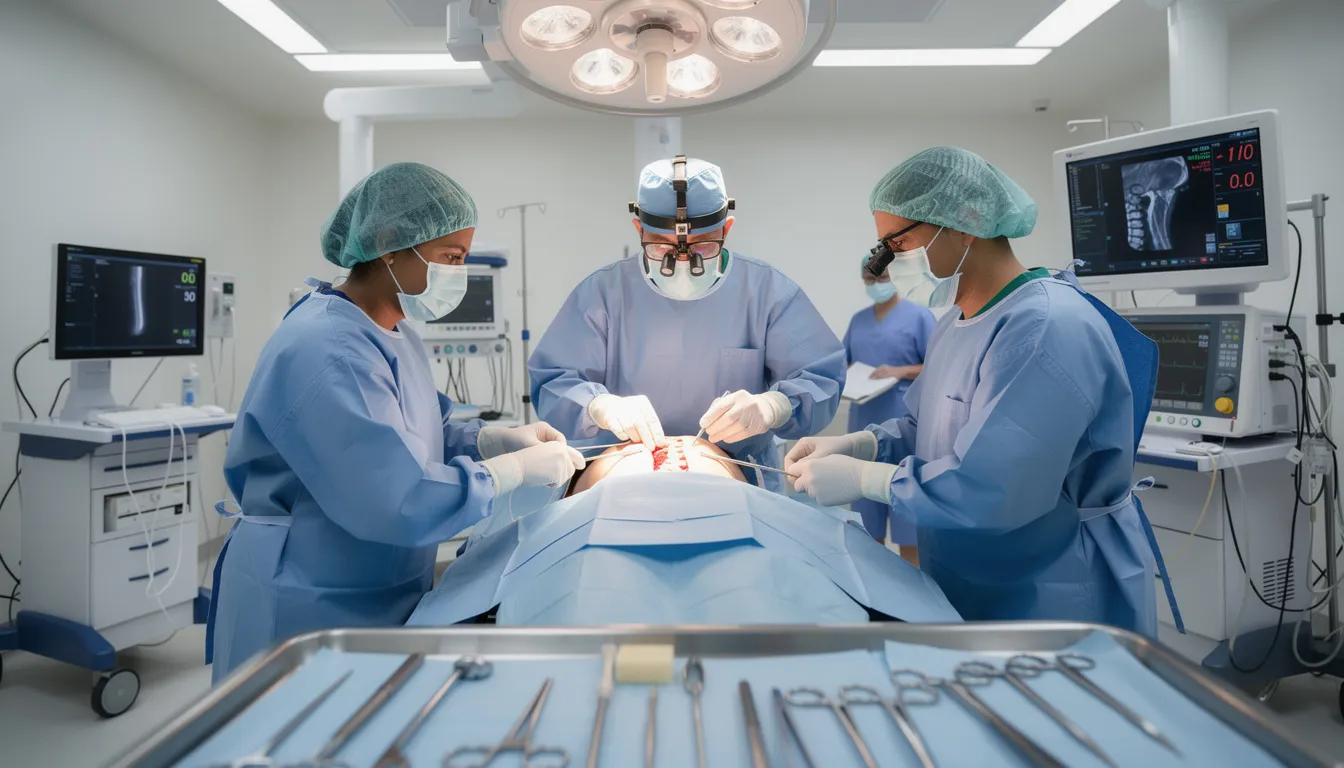
Different techniques are chosen based on the spinal level being treated, the direction of surgical approach, and the specific problem being addressed. Your surgeon approaches the spine from whichever angle provides the best access while minimizing risks for your particular situation.
Common lumbar approaches:
- Posterior lumbar fusion (PLF) accesses the spine through the back, placing bone graft along the sides of the vertebrae to achieve fusion
- Posterior lumbar interbody fusion (PLIF) approaches from the back and places a cage filled with bone graft between the vertebral bodies after removing the disc
- Transforaminal lumbar interbody fusion (TLIF) is similar to PLIF but enters from one side, reducing nerve retraction and potentially lowering complication rates
- Anterior lumbar interbody fusion (ALIF) approaches through the abdomen, allowing excellent disc removal and cage placement without disturbing back muscles
- Lateral lumbar interbody fusion (LLIF or XLIF) accesses the spine from the side, avoiding both the back muscles and major abdominal blood vessels
Cervical spine approaches:
- Anterior cervical discectomy and fusion (ACDF) is the most common neck fusion, performed through a small incision in the front of the throat
- Posterior cervical fusion uses screws and rods placed from the back, often for trauma or multilevel disease
Minimally invasive versus open surgery:
- Traditional open fusion requires longer incisions and more muscle dissection
- Minimally invasive spinal fusion uses smaller incisions, tubular retractors, and image guidance
- Benefits of minimally invasive techniques include reduced blood loss, less muscle damage, shorter hospital stays (2-5 days versus 4-7 days), and potentially faster recovery
- Robotic-assisted surgery can provide sub-millimeter accuracy in screw placement, reducing revision rates by 20-30% in some studies
Screw strategies:
- Pedicle screws are the standard, placed through the bony pedicle into the vertebral body
- Cortical bone trajectory (CBT) screws follow a different path and may provide better fixation in patients with osteoporosis
The choice of technique depends on your anatomy, bone quality, prior surgeries, and surgeon expertise. These options should be discussed in detail before your operation.
Bone Grafts and Spinal Hardware
Bone grafts and internal fixation devices work as a team during spinal fusion. The graft stimulates new bone growth and provides the biological foundation for fusion, while hardware holds the spine rigid until solid bone healing occurs.
Autograft bone (from your own body):
- Typically harvested from the pelvic iliac crest or from bone removed during decompression
- Provides the best fusion rates because it contains living bone cells, growth factors, and a scaffold for new bone
- No risk of disease transmission since it’s your own tissue
- Downsides include extra pain at the bone graft site, longer surgery time, and potential donor-site complications like infection or chronic discomfort
Allograft bone (from a bone bank):
- Donor bone that has been processed and screened to minimize infection risk
- Avoids the need for a second surgical site on your body
- May fuse more slowly than autograft in some cases
- Modern processing techniques have made allograft very safe and effective
Synthetic and biologic options:
- Demineralized bone matrix (DBM) processed from donor bone
- Ceramic bone substitutes that provide a scaffold for bone growth
- Bone morphogenetic proteins (BMPs) that actively stimulate bone formation
- Synthetic bone products that eliminate disease transmission concerns entirely
- Choice depends on patient factors, cost considerations, and surgeon preference
Hardware components:
- Screws anchor into the vertebrae and connect to rods that span the fused segments
- Plates may be used, particularly in cervical fusions
- Interbody cages are spacers placed between vertebrae to maintain normal height and promote fusion
- Hardware allows earlier mobilization and significantly improves the likelihood of achieving solid fusion
External bracing:
- Some surgeons prescribe a brace to wear when out of bed, particularly for multilevel fusions
- Braces provide additional support during the early healing phase
- Not all patients require bracing—this depends on the specific surgery and bone quality
Preparing for Spinal Fusion Surgery
Preparation starts several weeks before surgery and can significantly influence both outcomes and recovery speed. Taking this phase seriously gives you the best chance for a successful result.
Preoperative evaluations:
- Detailed history and physical examination with your surgeon
- Blood tests to check for anemia, infection, and metabolic issues
- ECG for patients over a certain age or with cardiac risk factors
- Imaging studies including X-ray, MRI, or CT scan to plan the exact fusion levels
- Possible consultation with other specialists if you have significant medical conditions
Modifiable risk factors to address:
- Smoking cessation is critical—stop at least 4-6 weeks before surgery, as smoking dramatically increases fusion failure rates
- Optimize diabetes control, aiming for hemoglobin A1c below 8% if possible
- Work on weight management if obesity is a concern
- Treat vitamin D deficiency or osteoporosis when present to improve bone healing potential
Medication adjustments:
- Stop or modify blood thinners such as warfarin, direct oral anticoagulants, aspirin, or clopidogrel as directed
- Certain anti-inflammatory medicines may need to be held
- Your surgeon and prescribing doctor will coordinate these changes
- Never stop prescription medications without specific instructions
Prehabilitation strategies:
- Targeted physical therapy to strengthen core muscles within your pain limits
- Regular walking to build cardiovascular fitness
- Flexibility exercises as tolerated
- Better preoperative fitness typically means faster postoperative recovery
Practical planning:
- Arrange help at home for the first few weeks after surgery
- Prepare a safe recovery space with raised chairs and grab bars in the bathroom if needed
- Stock up on easy-to-prepare meals
- Organize time off work—duration varies by job demands from 4 weeks to several months
Pre-op visit:
- Informed consent discussion covering risks, benefits, and alternatives
- Opportunity to ask questions about possible complications and expected outcomes
- Anesthesia review with discussion of general anesthesia and pain management plans
- Final confirmation of the surgical plan
What to Expect on the Day of Surgery
This section walks you through a typical surgery day from hospital admission until leaving the recovery area, so you know exactly what’s coming.

Arrival and check-in:
- Arrive at the hospital or surgical center several hours before your scheduled operating time
- Complete registration paperwork and change into a hospital gown
- Final identity verification and confirmation of the surgical site
Preoperative area:
- Vital signs including blood pressure, heart rate, and temperature
- IV line placement for fluids and medications
- Final review with the anesthesiologist discussing the anesthesia plan
- Meeting with your surgeon for last-minute questions
- Marking of the surgical site to confirm the correct location
Transfer to operating room:
- You’ll be moved on a stretcher to the operating room
- Positioning on the operating table—prone (face down) for most lumbar fusions, supine (face up) for anterior or cervical approaches
- Connection to monitoring devices tracking heart rhythm, oxygen levels, and blood pressure
Anesthesia:
- General anesthesia is administered, meaning you’ll be fully asleep
- A breathing tube is placed after you’re unconscious
- You won’t feel or remember the surgical procedure
Duration:
- Operative time typically ranges from 1-5 hours depending on the number of levels and complexity
- Additional time is needed for anesthesia induction, positioning, and emergence
- Your family will receive updates during the procedure
After surgery:
- You’re moved to the post-anesthesia care unit (PACU) for close monitoring
- The surgical team ensures you’re stable and waking appropriately before transfer to a hospital room
What Happens During Spinal Fusion Surgery
Technical details vary based on approach and indication, but most spinal fusions follow common steps. Understanding these can help demystify what happens while you’re asleep.
Exposure of the spine:
- An incision is made based on the chosen approach (back, front, or side)
- Muscles, ligaments, and soft tissues are carefully moved aside
- Minimally invasive techniques use tubular retractors through smaller incisions to minimize muscle damage
Decompression when needed:
- Laminectomy removes portions of bone that are compressing the spinal cord or spinal nerves
- Foraminotomy enlarges the openings where nerves exit the spinal canal to relieve pressure
- Disc material causing nerve compression is removed
Preparation of the fusion bed:
- Remaining disc material between vertebrae is removed in interbody fusion procedures
- The endplates of adjacent vertebrae are roughened to encourage bone graft incorporation
- This creates an environment where new bone can grow and fuse the segments
Graft and cage placement:
- Bone graft material is packed into the disc space and/or along the sides of the vertebrae
- Interbody cages filled with graft may be inserted to maintain normal height between vertebrae
- The graft serves as a scaffold for new bone growth during the fusion process
Hardware insertion:
- Screws are placed into the pedicles of the vertebrae being fused
- Rods connect the screws to provide rigid fixation
- Plates may be added, particularly in cervical fusions
- Intraoperative imaging (fluoroscopy or X-ray) confirms correct hardware placement
Closure:
- Bleeding is controlled and any necessary drains are placed
- Muscle layers are closed with sutures
- Skin is closed with sutures or surgical staples
- A sterile dressing is applied to the surgical site
Immediately After Spinal Fusion: Hospital Stay and Early Recovery
Early recovery focuses on three priorities: controlling pain, preventing complications, and getting you moving safely. The surgical team monitors you closely during this critical phase.
Post-anesthesia care unit (PACU):
- Continuous monitoring of heart rate, blood pressure, and oxygen levels
- Assessment of pain intensity using standard scales
- Neurologic checks evaluating leg or arm strength and sensation
- Ensuring you’re waking appropriately from anesthesia
Pain management:
- IV pain medicine initially, including opioids and non-opioid alternatives
- Transition to oral medications as you’re able to eat and drink
- Multimodal regimens combining different drug classes to reduce total opioid requirements
- Ice and positioning adjustments for comfort
Hospital stay duration:
- Minimally invasive single-level fusions: often 1-2 nights
- Traditional open or multilevel lumbar fusion: typically 2-5 nights
- Some cervical fusions may be outpatient or single overnight stays depending on the surgical center
Early mobilization:
- Sitting up in bed, often the same day as surgery
- Standing and short walks with assistance from physical therapy
- Early movement reduces risks of blood clots, pneumonia, and muscle weakness
- Walking distance slowly increases each day
Postoperative measures:
- Wearing a brace when out of bed if prescribed by your surgeon
- Sequential compression devices on your legs to prevent blood clots
- Incentive spirometry and deep breathing exercises to prevent pneumonia
- Monitoring for possible complications
Discharge criteria:
- Stable vital signs without fever
- Adequate pain control on oral medications
- Safe walking with or without assistive devices
- Clear understanding of home care instructions
- Bowel function returning (particularly important after lumbar surgery)
Recovery Timeline: Weeks to Years After Spinal Fusion
Recovery is gradual and varies considerably based on age, overall health, number of fusion levels, and job demands. Setting realistic expectations helps you track progress without frustration.

First 6 weeks:
- Primary focus on wound healing and controlled walking
- Strict activity restrictions: no heavy lifting (typically nothing over 5-10 pounds), no bending at the waist, no twisting
- Short walks several times daily, slowly increasing distance
- Follow-up visits at 2-3 weeks for wound check and removal of surgical staples or sutures
- X-ray imaging to confirm hardware position
- Pain medications gradually reduced
6 weeks to 3 months:
- Walking distance continues to increase
- Physical therapy often starts or intensifies
- Improving flexibility in areas around the fused vertebrae
- Gradual weaning from pain medications
- Light activities may be permitted based on surgeon guidance
- Brace use may be discontinued
3 to 6 months:
- Bone fusion is actively occurring but not yet complete
- Many patients notice meaningful pain relief and function improvement
- Increased activity levels, though still with some restrictions
- Return to desk jobs often possible at 4-8 weeks; more physical jobs may require 3-6 months or longer
- Continued physical therapy focusing on core strength and conditioning
6 to 12 months:
- Radiographic fusion typically confirmed by imaging tests
- Most patients approaching their new functional baseline
- Gradual return to more strenuous activities as approved
- Some residual stiffness in the fused segment is normal
Long-term (1 year and beyond):
- Most patients reach maximum improvement by about 12 months
- Permanent loss of motion at the fused segments
- Potential for more stress on adjacent spinal levels over time
- Success rates for sustained pain relief: 70-85% in appropriately selected patients
Lifelong back care after fusion:
- Maintain a healthy weight to reduce spinal stress
- Regular low-impact exercise such as walking, swimming, or cycling
- Avoid tobacco use permanently—smoking damages spinal tissues and increases risk of adjacent segment problems
- Good posture and proper body mechanics when lifting
- Regular follow-up if new symptoms develop
Risks, Complications, and Warning Signs
Spinal fusion is major surgery and carries both general surgical risks and procedure-specific complications. These should be reviewed in detail before you consent to the operation.
General surgical risks:
- Infection at the surgical site (2-5% incidence)
- Blood loss potentially requiring transfusion
- Blood clots including deep vein thrombosis and pulmonary embolism
- Pneumonia, particularly in smokers or those with lung disease
- Anesthetic complications including allergic reactions
Spine-specific complications:
- Nerve damage causing numbness, weakness, or leg pain (1-3% incidence)
- Spinal cord injury (rare but serious, particularly with cervical surgery)
- Dural tears with spinal fluid leak, usually repaired during surgery
- Hardware malposition requiring revision
- Hardware breakage or loosening over time
Nonunion (fusion failure):
- Occurs in 5-35% of cases depending on risk factors
- Higher rates in smokers, people with diabetes, severe osteoporosis, or those not following activity restrictions
- May cause persistent pain and instability
- Often requires additional surgery to achieve solid fusion
Adjacent segment disease:
- Increased stress on vertebrae next to the fused vertebrae
- May lead to degeneration, stenosis, or instability at those levels
- Can develop years after successful fusion
- May require more surgery in 10-25% of patients over 10 years
Warning signs requiring urgent medical attention:
- New or worsening weakness in your legs or arms
- Loss of bowel or bladder control
- Severe chest pain or sudden shortness of breath (possible pulmonary embolism)
- Calf swelling, pain, or redness (possible blood clot)
- High fever over 101.5°F
- Wound redness, increasing swelling, or drainage from the surgical site
- Return of original symptoms or new severe pain after initial improvement
Following your surgeon’s postoperative instructions and attending all follow-up appointments helps detect and address complications early.
Pain Management After Spinal Fusion
Pain is expected after fusion surgery but should gradually improve with structured management. Effective pain control helps you participate in rehabilitation and recover faster.
Multimodal pain control:
- Acetaminophen (Tylenol) as a baseline medication for reducing pain
- Non-opioid medications including certain anti-inflammatories when approved
- Nerve-targeting drugs like gabapentin or pregabalin for nerve-related discomfort
- Muscle relaxants for spasm in the early postoperative period
- Short-term opioids when necessary for breakthrough pain
Opioid use:
- Typically intended for the first few days to a few weeks only
- Clear tapering plan to minimize risk of dependence
- Should not be the sole method of pain control
- Constipation prevention important while taking opioids
Non-medication strategies:
- Ice or heat application as approved by your surgeon
- Proper positioning with pillows for support
- Relaxation techniques and distraction
- Gradual activity and walking, which actually helps with pain over time
- Physical therapy exercises as instructed
When to contact your surgeon:
- Pain suddenly worsens after a period of improvement
- Pain fails to improve over several days despite medication
- Pain is accompanied by fever, new weakness, or other concerning symptoms
- You’re running out of medication faster than expected
Special considerations:
- Patients already on long-term opioids before surgery need a preoperative pain plan
- Coordination between your surgeon and a pain specialist may be helpful
- Realistic expectations about pain levels help—the goal is manageable pain, not zero pain
Alternatives and Motion-Preserving Options
Not everyone with back or neck pain benefits from fusion, and a range of non-surgical and surgical alternatives exists. Understanding your options helps you make the best choice for your situation.
Conservative treatments:
- Structured physical therapy with a spine-specialized therapist
- Supervised exercise programs focusing on core strength and flexibility
- Medications including anti-inflammatories, muscle relaxants, and nerve-pain drugs
- Epidural steroid injections for temporary pain relief from nerve inflammation
- Nerve blocks targeting specific pain generators
- Lifestyle modifications including weight loss, ergonomic improvements, and smoking cessation
- Time—many spinal conditions improve with months of consistent conservative care
Motion-preserving surgical options:
- Cervical disc replacement in carefully selected patients with single-level disc disease
- Lumbar disc replacement, though more limited in application than cervical
- These aim to maintain segment movement and may reduce stress on adjacent levels compared to fusion
- Not appropriate for all patients—instability, facet arthritis, and other factors may rule them out
Other surgical alternatives:
- Decompression without fusion for certain stenosis cases where instability is not present
- Laminectomy or laminotomy alone when the spine remains stable
- Foraminotomy to relieve pressure on nerves without fusion
- Choice depends on the pattern of instability and nerve compression
Discuss the pros and cons of fusion versus motion-preserving or purely decompressive procedures with a spine specialist familiar with all options. Getting a second opinion before major spine surgery is reasonable and often encouraged by orthopaedic surgeons.
Key Questions to Ask Your Surgeon
Being well informed helps you participate in shared decision-making and set realistic expectations about spinal fusion. Consider bringing a written list of questions to your consultation.
About your diagnosis:
- What exactly is my diagnosis, and which spinal levels are affected?
- Why is fusion recommended over continued non-surgical care?
- Are there other surgical options that might work for my condition?
- What happens if I don’t have surgery?
About the surgical technique:
- Will you use a front, back, or side approach?
- Will the surgery be minimally invasive or open?
- What type of hardware will you use?
- What bone graft material do you recommend and why?
- How many levels will be fused?
About recovery:
- How long will I be in the hospital?
- When can I drive again?
- When can I return to work, and does it depend on my job type?
- What activity restrictions will I have, and for how long?
- What is a realistic timeline for feeling better?
About risks and outcomes:
- What are the chances this surgery will relieve my pain?
- What is the likelihood I’ll need more surgery in the future?
- What is my risk of fusion failure based on my specific situation?
- How do my risk factors (smoking, age, other conditions) affect my expected outcome?
About follow-up:
- Who should I contact with postoperative concerns?
- How are after-hours emergencies handled?
- How often will I need follow-up imaging to check the fusion?
- What signs should prompt me to call immediately versus wait for my next appointment?
Your healthcare provider should take time to answer these questions thoroughly. If you feel rushed or uncertain, don’t hesitate to ask for clarification or seek a second opinion from another spine specialist.
Spinal fusion is a well-established spine surgery with the potential to significantly improve quality of life for patients with specific spinal conditions. Understanding the fusion process, preparing properly, and following your body’s ability to heal through careful rehabilitation all contribute to the best possible outcome.
If you’re considering lumbar surgery or have already been recommended for fusion, take an active role in your care. Ask questions, optimize your health before surgery, and commit to the recovery process. Your partnership with your surgical team makes all the difference in achieving lasting pain relief and returning to the activities that matter most to you.