Could you have spinal stenosis? Make the diagnosis and treat it effectively
This article also appears on Top Doctors in collaboration with Caspar Aylott
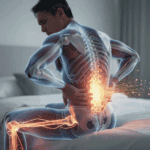
Having treated 1000s of people with spinal stenosis, one of our top spinal surgeons, Mr Caspar Aylott, understands fully well how miserable this condition can be: Sometimes you can’t stand straight and other times it even prevents you from walking, causing excruciating pain and weakness down your legs.
So what type of treatment is available and how effective is it? Mr Caspar Aylott explains.
What is spinal stenosis?
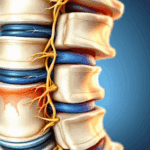
Put simply, spinal stenosis is the narrowing of the passageways in the spine leading to pinching of the spinal cord or nerve roots. Symptoms may appear in the following places:
- In the neck, this may produce miserable neck and arm pain
- In the lower back, perhaps a combination of back and leg pain
- Pressure on nerves may also produce pins and needles or numbness
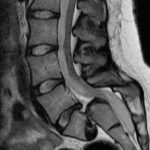
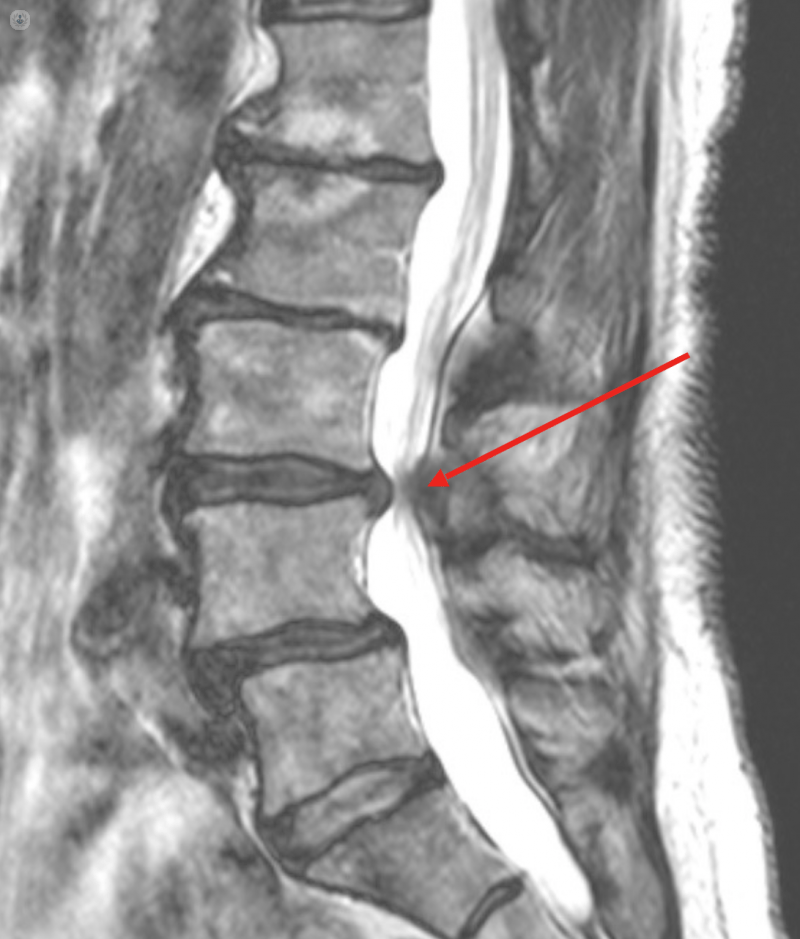
The MRI image to the right (Figure 1.) shows a good example of spinal stenosis in the lower back.
Is it easy to diagnose spinal stenosis?
Yes, but many people are never correctly diagnosed and may have been told that they have ‘simple back pain’. So lots of people walk around (or I should say struggle to walk around) NOT aware that they have spinal stenosis. Worse still, people waste time and money having pointless treatments which may make the problem worse!
It is really important to diagnose spinal stenosis because it is treated differently from common back pain.
A Typical Case
Meet Anthony
Anthony is a previously active 65-year-old gentleman. He told me about his back pain and difficulty walking and his symptoms had worsened over two years.
He had tried everything…
In desperation and at great expense, he had tried all the conservative treatments he could. This included weekly physiotherapy and chiropractic and osteopathic manipulation. Nothing seemed to help and sometimes even made his pain worse. Treatments were repeated many times and painkillers didn’t help either but just gave him horrible side-effects.
Further investigations were arranged
His symptoms were actually typical of spinal stenosis but unfortunately, this had not been thought of. So, I examined him and arranged appropriate investigations and imaging. Within one hour he had a diagnosis of spinal stenosis. I discussed possible treatment options with him and he chose to undergo a small operation.
Six weeks later…
…he was completely better. I remember that he was very cross that he had wasted so much time and money on treatments that didn’t work but also delighted to be restored to health and fitness.
Who gets spinal stenosis?
Potentially anyone can develop spinal stenosis but this becomes more common after the age of 50. Also, some of us are more prone to spinal stenosis if we are born with a narrower spinal canal to start with.
Spinal stenosis becomes more common as we get older because the discs (cushions between the bones) narrow and the facet joints behind the spine enlarge. This is the same degenerative process that may make our finger joints become more ‘knobbly’ with age.
How is spinal stenosis treated?
This depends on the severity of the stenosis and your symptoms. Treatment works really well for spinal stenosis and nerve damage can be prevented. If the stenosis is mild then simple back exercises and stretches may help; I always like to encourage walking and exercise initially.
You may get lucky and symptoms go away but there is a chance that they will return – a disadvantage of a long life!
If the stenosis is worse, or there is also a spinal deformity, then it is less likely that symptoms will get better and/or stay better.
Can spinal injections help?
Spinal injections are a simple and very safe way of trying to settle things down. Improvement may be temporary or sometimes last really well.
In my experience of performing 1000s of injections, I am often surprised how well an injection can work, but predicting who will benefit most, is tricky.
If spinal stenosis is severe then it is unlikely that non-operative treatments will work; no amount of physiotherapy or drugs will resolve this problem satisfactorily. Common sense tells us that a physical problem like spinal stenosis requires a physical solution.
What surgical treatment works for spinal stenosis?
The best procedure is surgical decompression. It works very well for spinal stenosis and there is loads of evidence to prove it. Furthermore, most patients stay better, stop analgesia and return to doing everything with a greatly improved quality of life.
Although spinal surgery sounds frightening, modern surgery by an experienced surgeon is quite safe and complications are rare.
In my experience it is very unusual for a patient to regret having surgery for spinal stenosis, however, I always consider surgery a last resort when other options have failed.
So, how do I know if I have spinal stenosis? The first thing you should do is make an appointment to see me and we can find out together. I can definitely help you.
More Back articles