How to Decompress Neck Safely at Home (From a UK Spine Surgeon)

I’m Caspar Aylott, Consultant Spine Surgeon at the UK Spine Centre. Every week I see patients whose neck pain started as a niggling ache and slowly took over their lives. The good news is that most people with everyday neck stiffness and discomfort can improve at home with the right approach. This guide walks you through how to decompress your neck safely, what to avoid, and when to seek help.
Key Takeaways
- Gentle neck decompression can alleviate neck pain, reduce stiffness, and improve mobility for most people when done correctly and consistently.
- Not everyone should try these techniques at home. If you have new arm weakness, trouble walking, or bladder and bowel changes, seek urgent medical assessment rather than home exercises.
- The safest starting points are posture changes, simple neck decompression exercises like chin tucks, and checking your pillow setup before moving to cervical traction devices or a neck hammock.
- Consultation with a healthcare provider is recommended before starting neck decompression techniques, especially if you have a history of injury, surgery, or bone-thinning conditions.
- If any exercise causes sharp pain, dizziness, or tingling, stop immediately and speak with a healthcare professional.
What “Neck Decompression” Actually Means in Everyday Language
Neck decompression simply means making a little more space and reducing pressure in your neck. Benefits of neck decompression include reduced pain and tension, nerve relief, and increased mobility. The idea is to calm painful joints, discs, muscles, and nerves that have become overloaded.
Your cervical spine is made up of seven small bones stacked like a column, with soft discs acting as cushions between them. Nerves run out from between those bones to your shoulders, arms, and hands. When you spend long hours at a desk, look down at a phone, or drive for longer periods, these structures get loaded and compressed. Neck decompression creates space between cervical vertebrae, easing that pressure.
It is important to understand the difference between what you can do at home – gentle stretching, posture correction, simple traction – and medical decompression, which may involve imaging, injections, or surgery. Home methods can reduce symptoms and sometimes delay the need for treatment, but they cannot reverse severe structural problems like large herniated discs pressing on nerves. That said, many people with neck pain improve with non-surgical, at-home strategies when used carefully.
Is Neck Decompression Right for You? Safety First and Contra-Indications
Not everyone should try decompression exercises or neck traction at home, even if they have neck pain. Immediate medical advice should be sought if neck tension is accompanied by severe symptoms.
Avoid self-decompression and see a clinician first if you have:
- A recent accident or whiplash injury, or any concern about a possible spinal fracture in older adults
- A history of neck fracture or previous neck surgery
- Known severe arthritis, inflammatory conditions, or spinal instability
- Cancer affecting the spine or severe osteoporosis
- Connective tissue disorders
Neurological red flags that rule out DIY decompression:
- New arm or hand weakness, or loss of grip strength
- Difficulty with coordination, buttons, or fine tasks
- Electrical shooting pain down the arm
- Unsteadiness when walking
- New bladder or bowel control problems
Older patients (over 65) or those on long-term steroids or with known bone thinning should be especially cautious with cervical traction devices and strong neck stretches. Muscle strain can result from sudden movements or overuse, and degenerative conditions like osteoarthritis contribute to chronic neck pain, making age-related spine changes and professional guidance even more important.
If any exercise or device makes symptoms sharply worse, causes headaches, dizziness, blurred vision, or nausea, stop immediately. A 2023 systematic review of serious adverse events linked to physical interventions to the neck found 334 cases, with vascular and neurological injuries among them. Most people do fine with gentle techniques, but the risks are real.
Simple Neck Decompression Exercises You Can Start Today
Think of these as your first-line toolbox. These simple neck traction exercises can be done at home to relieve pain and stiffness with no equipment. Gentle neck stretching techniques can alleviate muscle tension and improve mobility. The golden rules: move slowly, keep breathing, stop short of pain, and avoid rapid movements or excessive force during self-stretching to prevent injury. Aim for a “stretch or relief” feeling, never a “pinch or sharp” feeling.
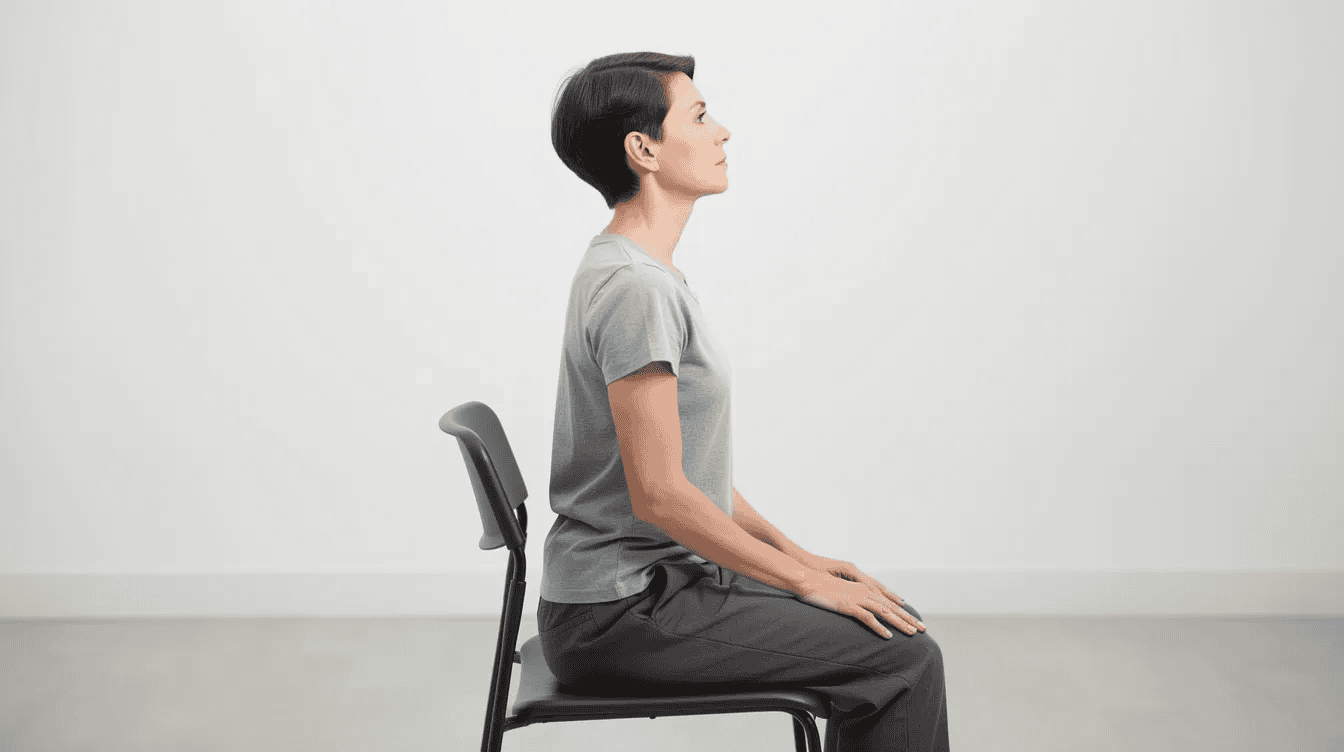
Chin tucks: Sitting or standing tall, slide your chin straight back as if making a gentle double chin. Hold for 5–10 seconds, then relax. Repeat 8–10 times. Chin tucks strengthen deep neck flexors and correct forward head posture. Do these 2–3 times per day. This is one of the safest neck traction exercises to start with because it restores a more neutral head position rather than pulling hard on the neck.
Side neck stretch: Sit on a chair and hold the seat with one hand. Gently tip your ear toward the opposite shoulder, feeling a stretch down the other side of your neck. Keep your shoulders relaxed. Do not force it with your hand. Hold 15–20 seconds, then switch sides.
Back of neck stretch: Sit tall, gently nod your chin down as if saying “yes,” then slowly allow your head to roll slightly forward. Imagine space opening between the back of your head and upper back. Hold for 10 seconds, then return.
Shoulder blade reset: Roll your shoulders gently, then squeeze your shoulder blades down and back toward your chest. This frees the upper back, which helps decompress the neck indirectly and relieve tension across the neck muscles.
Aim for 5–10 minutes of these stretching exercises, 2–3 times per day. Perform neck decompression exercises 2–3 times per week at minimum, but daily gentle work is fine if comfortable. Consistency matters more than intensity. Heat therapy can help relax tight muscles before performing neck stretches.
Using Your Hands, Towel or Band to Gently Decompress the Neck
Some people enjoy the feeling of light neck traction created with their hands, a folded towel, or a soft band. Self-traction maneuvers can provide relief from neck pain at home without specialist visits, but care is essential.
Hands-based traction: Lie on your back with your knees bent. Cup the base of your skull with both hands, elbows resting on the bed or floor. Gently pull the head away from the shoulders – a slow, light lengthening – for 5–10 seconds, then relax. No yanking, no crunching. Keep your stomach relaxed and breathe normally.
Towel traction: Place a folded towel behind your head at ear level. Hold one end in each hand. Gently draw the towel forward and slightly upward to give a small, comfortable lift. This can gently stretch the back of the neck and relieve pressure on compressed joints. Hold briefly, then release.
Exercise band or yoga strap: The same principle applies. Wrap the band behind the base of your skull, hold the ends, and apply pressure slowly and gently. Protect your hair and skin, keep the movement controlled, and never jerk or bounce.
A firm warning: aggressive pulling or sudden twisting of the neck – whether done by yourself or a partner – is dangerous. If a partner helps, they should use very small forces and stop at the first sign of discomfort, pins and needles, or visual changes.
Neck Traction Devices, Neck Hammocks and Cervical Traction
Cervical traction is a method used in clinical settings to relieve neck pain. Home traction devices aim to replicate this by using gentle force to gently pull the head away from the body and decompress the neck.
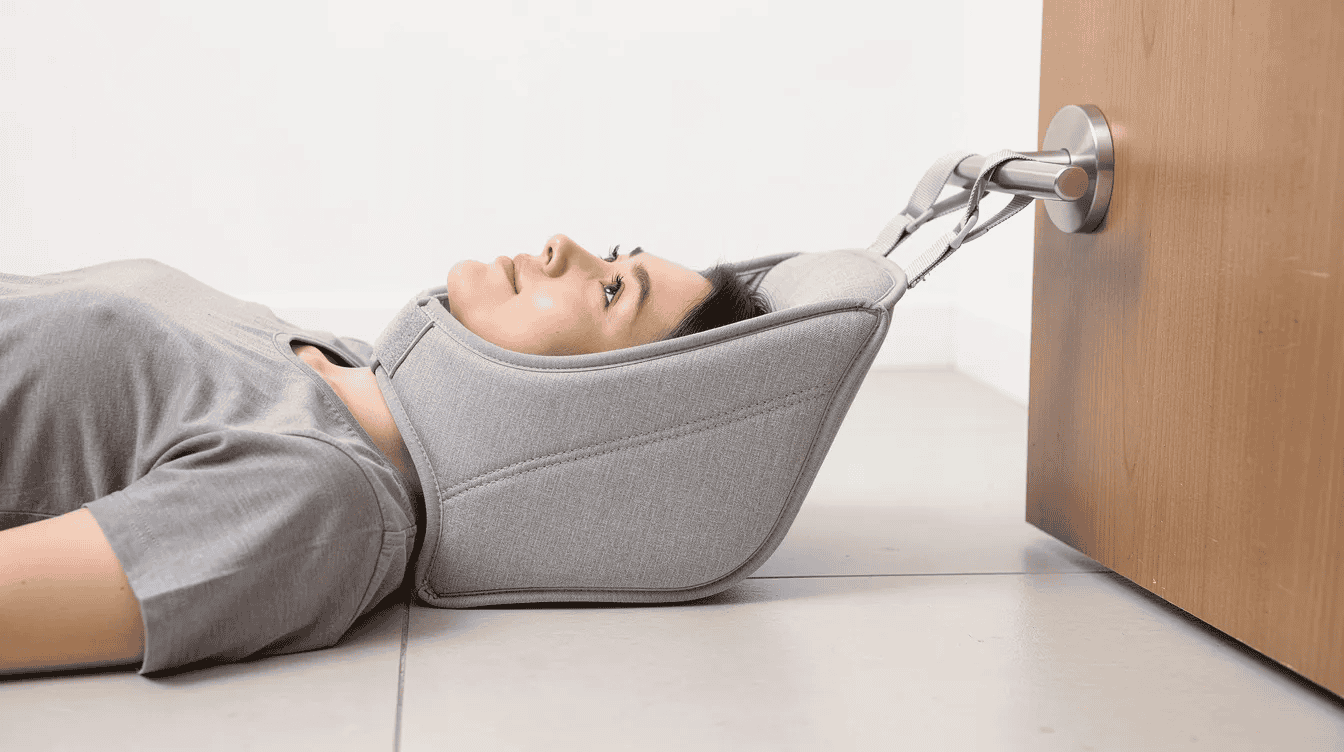
Main types of traction devices:
- Over-the-door traction: Over-the-door traction devices apply controlled weight to the neck while seated. A harness fits under the chin and back of the head, attached by a rope and pulley to a weight bag.
- Inflatable collars: Soft cervical traction devices that you pump up to gently stretch the neck upward.
- Neck hammock: A fabric sling that hangs from a door, rail, or sturdy fixture. Your head is cradled in the sling while your body lies on the floor, and gravity provides a light pulling force.
Neck traction treatments typically last 10–30 minutes, but I recommend starting with very short sessions of about 5 minutes at low tension. Never fall asleep in any device. Neck traction can improve flexibility along the cervical spine and can alleviate symptoms of spinal nerve root compression. Neck traction can also relieve pain from herniated discs in some cases.
Who should avoid these without specialist advice: people with severe arthritis, known disc herniation with nerve symptoms, previous neck surgery, or medical causes of dizziness.
My honest view as a spine surgeon: some patients find these devices helpful for temporary pain relief and stiffness, others feel no benefit, and a few are irritated by them. They are one tool, not a cure. Manual cervical traction involves a therapist pulling the head gently, and a physical therapist can guide you on what approach suits you best. Speak with your GP or a spine specialist before buying stronger mechanical cervical traction devices.
Decompressing Your Neck Through Posture, Work Setup and Daily Habits
The way you sit, stand, and use your phone every day often compresses the neck more than any single injury. Poor posture causes excessive strain on the cervical spine, so correcting it is one of the most effective methods to decompress your neck long-term.

Forward head posture is a common cause of neck compression – your chin pokes out, your head hangs in front of your shoulders, and the back of the neck takes the strain. Bad posture like this is extremely common with laptops and smartphones. Stress and anxiety can lead to muscle tightness in the neck, making the problem worse.
Desk tips for good posture:
- Screen at eye level, chair pulled close
- Elbows at roughly 90 degrees, feet flat on the floor
- Back supported, shoulders relaxed
- Stand and walk every 30–45 minutes to reduce strain and reset your position
Phone habits: Hold the phone up towards eye level. Use voice notes where possible. Avoid looking down for longer periods.
Driving posture: Seat slightly reclined, headrest level with the back of your head, steering wheel close enough to avoid slumping. Take breaks every 60–90 minutes on long journeys.
Gentle strengthening of the upper back and core – light resistance-band rows, wall push-ups – shares the load more evenly across the entire spine and reduces muscle tension in the neck over weeks to months. This is where long-term neck health really lives.
How to Decompress Your Neck While Sleeping
Night-time is a chance for your body to recover, but only if the head and neck are supported in a neutral, relaxed position.
Best sleeping positions:
- Back sleeping: Use a medium-height pillow that supports the natural curve of the neck. A thin pillow may work if you have a smaller frame; too high and your chin gets pushed toward your chest.
- Side sleeping: Choose a pillow that keeps your nose, chin, and breastbone in one straight line.
Avoid sleeping on your stomach. The head must twist to breathe, forcing the neck into rotation and extension for hours. This loads tight muscles and compressed joints rather than allowing them to recover.
Consider a contoured or cervical pillow if standard ones are too high or flat – though no single pillow suits everyone, and it often takes a week or two to adjust.
Bedtime routine for decompression: Try two or three gentle chin tucks and side stretches, then lie on your back for 5 minutes, focusing on lengthening the neck and breathing slowly. This simple wind-down can gently stretch fatigued neck muscles and set up better overnight recovery.
If you have sleep apnoea, severe snoring, or known spinal problems, seek personalised advice before major changes to your sleep position.
When Neck Decompression Alone Is Not Enough: Injections and Surgery
Most people with neck pain improve without surgery. But some need extra help when home decompression exercises and physical therapy are not enough.
Imaging – usually an MRI – can check for serious causes of neck compression, such as a large slipped disc or spinal canal narrowing (spinal stenosis) around the nerves or spinal cord. Neck decompression can alleviate symptoms of herniated discs, but when nerve compression is severe, exercises alone may not be sufficient.
Before considering an operation, non-surgical options include targeted injections of local anaesthetic and steroid around irritated joints or pinched nerves to reduce inflammation and provide pain relief, alongside appropriate analgesia and medication strategies, and procedures such as facet joint denervation for arthritic facet pain, as part of a wider range of specialist spinal treatments.
Neck decompression surgery aims to gently remove pressure from a compressed nerve or spinal cord, sometimes fusing or supporting the spine with implants to keep it stable. Surgery is usually considered when there is clear structural pressure plus ongoing or worsening arm pain, weakness, or walking problems despite good non-surgical care. Research suggests cervical radiculopathy affects roughly 83 per 100,000 people annually, and only a minority of those need an operation; many people manage symptoms with conservative care similar to that used for back pain from spinal problems, while others may benefit from targeted procedures such as lumbar decompression surgery for lower back nerve compression.
If you are worried about the need for surgery, seek a detailed face-to-face assessment with a Consultant Spine Surgeon and ask plenty of questions about risks, benefits, and alternatives; arranging a specialist spine appointment can clarify your options.
Putting It All Together: A Simple Daily Plan to Decompress Your Neck
Here is an example day for someone with mild to moderate neck pain and no red-flag symptoms.
Morning (5 minutes): Chin tucks (10 reps), side neck stretches (15 seconds each side), shoulder blade resets (10 reps). Check your work or study posture is set up well before you begin.
Throughout the day: Every 30–45 minutes, stand up, roll your shoulders, gently lengthen the neck, and reset your head over your shoulders. These micro-breaks relieve tension and reduce strain before discomfort builds.
Late afternoon (optional, 5–10 minutes): If you tolerate it, use a neck hammock or simple hand-based traction for a short, comfortable session. Keep it gentle.
Evening wind-down: Gentle stretching exercises, a hot shower or warm pack over the shoulders to improve blood flow and relax the muscles, then check your pillow and sleep position to support overnight decompression. This routine supports overall well being and helps manage muscle tension before sleep.
Important: If symptoms are severe, getting worse, or not improving after 4–6 weeks of careful self-care, arrange an assessment with a GP, physical therapist, or spine specialist; a video consultation with a spine specialist can be a convenient first step. Home decompression is generally safe for most people, but it has its limits. Your healthcare provider can help determine whether further investigation is needed.
Common Questions About Neck Decompression
These are brief answers based on questions I hear regularly from patients at the UK Spine Centre. They give general guidance and do not replace a personalised consultation with your healthcare professional, especially if you have a complex medical history.
How often should I decompress my neck?
For simple neck stiffness, aim for gentle decompression exercises little and often – 5–10 minutes, 2–3 times per day is a good starting point. Start with fewer repetitions and shorter holds, then build up over 2–3 weeks. If pain increases or new tingling, weakness, or dizziness appears, reduce or stop the exercises and seek professional assessment.
Can neck decompression help a trapped nerve in my arm?
If arm pain, tingling, or numbness comes from a pinched nerve in the neck, gentle decompression positions can sometimes ease symptoms, especially in the early weeks. A randomised controlled trial found that combining gentle traction with neural mobilisation produced large improvements in pain and disability over four weeks. However, home exercises should never replace proper evaluation when there is clear nerve involvement – particularly if there is weakness, loss of grip, or symptoms in both arms. In clinic, targeted physiotherapy, medication, injections, or occasionally surgery may be needed.
Is it safe to use a neck hammock or cervical traction device every day?
For many otherwise healthy adults, short daily use of a gentle neck hammock or light cervical traction can be safe if it remains comfortable and does not cause headaches, dizziness, or extra pain. I recommend starting with alternate days for 5–10 minutes and assessing how the neck and arms feel over the next 24 hours. People with arthritis, osteoporosis, previous neck surgery, known disc prolapse, or balance problems should not use these devices daily without medical advice. Neck traction treatments typically last about 10–30 minutes in clinical settings, but home sessions should start shorter.
How long does it take for neck decompression exercises to work?
Some people notice a lighter, freer feeling in the neck within a few days. More lasting improvement in posture, strength, and pain usually takes 4–6 weeks of regular practice. Track your progress – pain levels, neck movement, ability to sit at a desk comfortably – so small gains are not missed. If there is no improvement after 6 weeks of consistent effort, seek further assessment at a spine or pain clinic.
Can I still go to the gym while I’m trying to decompress my neck?
Many people can continue light gym work while managing neck pain. Avoid heavy overhead lifting, contact sports, and high-impact movements during a painful flare-up. Focus on lower body, core, and gentle upper-back exercises that do not provoke discomfort, keeping weights light with slow, controlled technique. A physical therapist or spine specialist can help tailor a safe programme if you are unsure what is appropriate for your body.