Discectomy & Microdiscectomy: A Complete Patient Guide from The UK Spine Centre

Introduction
Discectomy is surgery to remove part of a damaged disc that is compressing a nerve in your spine. It is one of the most commonly performed spinal operations, used to relieve pain, numbness and weakness caused by a herniated disc – most often in the lower back (causing sciatica) or neck (causing arm symptoms). Microdiscectomy is its minimally invasive counterpart: the same decompression achieved through a small incision, using an operating microscope and specialised instruments to protect nearby nerves and healthy tissue.
In my practice at The UK Spine Centre, I almost always perform minimally invasive microdiscectomy as a day-case procedure. Patients are up and walking within a few hours of surgery and go home the same day. I have performed thousands of these operations with excellent outcomes, and this guide draws on that experience – as well as the best available evidence – to explain when discectomy is needed, what happens during the procedure, and what recovery genuinely looks like.
This article focuses on lumbar and cervical discectomy and microdiscectomy for herniated discs in adults. It does not cover large fusion operations for instability, tumour surgery or paediatric spinal conditions. It is written for adults with persistent back or neck pain, sciatica or nerve symptoms who are considering surgery or have been told they “might need a discectomy” – whether you are an NHS patient, a UK private patient, or travelling internationally for treatment.
Why does this matter? Unresolved nerve compression can lead to permanent nerve damage, ongoing weakness and a profound loss of quality of life. Proper decompression by an experienced surgeon can rapidly restore function and relieve symptoms that have been dominating your life for months.
A discectomy is typically recommended when a proven disc herniation continues to compress a nerve despite several weeks or months of good non-surgical care, and when pain, weakness or function are significantly affected. Discectomy may not be the first treatment option for herniated discs – it is reserved for when conservative treatment has genuinely been given a fair trial, or when neurological deterioration demands urgent action.
By the end of this guide you will:
- Understand what discectomy and microdiscectomy actually involve as a surgical procedure.
- Know when surgery is appropriate and why age is not the main deciding factor.
- See what to expect before, during and after a day-case microdiscectomy at The UK Spine Centre.
- Learn the real recovery timelines and how quickly symptoms such as sciatica often improve.
- Know how to judge surgical expertise and why surgeon skill and decompression quality matter more than the label on the procedure.
Understanding Discectomy and Microdiscectomy
Your spine is built from a stack of vertebrae separated by intervertebral discs – tough, fibrous cushions that absorb shock and allow movement. Each disc has an outer ring (the annulus fibrosus) and a soft gel-like centre (the nucleus pulposus). When a disc herniates, the nucleus pulposus protrudes through a tear in the annulus fibrosus and can press on a nerve root or, in more serious cases, the spinal cord. This nerve compression is what causes the sharp, radiating pain, numbness and weakness that bring most patients to my clinic.
A discectomy directly addresses this problem: it is surgical decompression – physically removing the portion of disc material that is compressing the nerve so the nerve can recover.
What Is a Discectomy?
A discectomy is the surgical removal of part (or, rarely, all) of an intervertebral disc that is pressing on a nerve or the spinal cord. The procedure is most commonly performed in the lower back, where herniated discs commonly cause sciatica – pain and numbness that radiates down the leg. Lumbar discectomy at levels such as L4–L5 or L5–S1 accounts for the majority of cases. Cervical discectomy addresses disc prolapse in the neck, where compression can cause arm pain, weakness or loss of coordination; this is sometimes performed via an anterior approach (anterior cervical discectomy), often combined with a bone graft or disc replacement to maintain stability. Thoracic discectomy is rarer and requires more specialist expertise due to the anatomical constraints of the mid-spine.
Modern discectomy usually involves removal of only the offending fragment of disc, preserving as much normal disc tissue as possible. The goal is targeted: relieve pressure on the nerve root, restore space around it, and allow the nerve to heal. Herniated discs commonly cause chronic low back pain and sciatica symptoms – including sharp leg pain, numbness and weakness – and discectomy directly addresses this mechanical pressure.
What Is a Minimally Invasive Microdiscectomy and How Is It Different?
Microdiscectomy is a minimally invasive form of discectomy. The surgeon makes a very small incision – typically 2–3 cm – and uses an operating microscope and specialised instruments to access and remove the disc fragment compressing the nerve. Minimally invasive discectomy uses a tubular retractor for surgery, gently separating muscles rather than cutting through them, which results in less blood loss, less tissue disruption and significantly less post-operative discomfort.
By contrast, traditional “open” discectomy requires a larger incision and more extensive muscle stripping, leading to a longer hospital stay (often one to two days), more pain and a slower return to normal function. One comparative study showed mean recovery of 5.2 weeks for microdiscectomy versus 7.6 weeks for open discectomy, with complication rates also lower in the microdiscectomy group (~15% vs ~23%).
At The UK Spine Centre, I perform microdiscectomy as a day-case surgical procedure. Most patients stand and walk within a few hours and go home the same day. Minimally invasive surgery has fewer complications than open surgery, and minimally invasive techniques reduce post-operative pain significantly. But although the incision is smaller, the critical step – thorough nerve decompression – is exactly the same, and must be performed with absolute precision.
Understanding how a disc herniation actually causes symptoms helps make sense of when microdiscectomy is the right choice.
How a Herniated Disc Causes Sciatica and Nerve Pain
When a lumbar disc herniates, the inner nucleus pulposus bulges or ruptures through the annulus fibrosus and can press directly on the nerve root within the spinal canal or the exit foramen. Sciatica is often caused by lumbar disc herniation at the L4–L5 or L5–S1 levels, and symptoms include pain and numbness in the leg, pins and needles, and sometimes motor weakness such as difficulty lifting the foot (foot drop).
Two mechanisms drive these symptoms: direct mechanical compression – physical pressure on the nerve – and chemical inflammation from the disc material itself, which irritates the nerve and amplifies pain signals. Both factors contribute, which is why some patients have severe pain even from a relatively small herniation.
Critically, imaging (usually MRI) must correlate with the clinical picture. Not every disc bulge seen on MRI needs surgery. The key question is whether the herniation is compressing the symptomatic nerve and causing significant, ongoing problems despite non-surgical treatment. Surgical decompression is indicated for persistent nerve compression symptoms – not for abnormal-looking scans in isolation.
Now that the mechanism is clear, the natural next question is: when should you actually consider surgery?
When Is Discectomy or Microdiscectomy Recommended?
Surgery is considered when the body’s natural healing process and structured conservative treatment have not been enough to relieve symptoms, or when nerve function is deteriorating. The decision rests on severity, duration and functional impact – not on age or NHS resource limitations.
Typical Indications for Discectomy: Nerve Compression
The main indications for discectomy include:
- Persistent radiculopathy: severe leg or arm pain from a confirmed herniated disc lasting more than 6 to 12 weeks despite good conservative treatment – including physiotherapy, appropriate medication and activity modification. A discectomy is typically recommended when non-surgical treatments fail after 6 to 12 weeks.
- Progressive weakness: motor deficits such as foot drop, difficulty lifting the leg, or loss of grip strength due to nerve compression. Severe radiating pain and progressive neurological deficits often indicate the need for surgery.
- Intolerable pain: symptoms that severely limit walking, sleep, or ability to work or care for family, and that do not respond to pain management strategies.
- Recurrent relapses: disabling episodes of sciatica that keep returning, each time taking many weeks to settle.
- Emergency indications: cauda equina syndrome – saddle numbness, bladder or bowel changes – is a medical emergency requiring immediate surgical intervention and must never be delayed.
Pre-operative imaging is usually required to plan a discectomy. At The UK Spine Centre, we use high-resolution MRI (often available same-day on Harley Street) and correlate findings meticulously with the clinical examination. Patients with severe or persistent radiculopathy may require a discectomy, but our multidisciplinary team always explores non-surgical options first, except where there is clear neurological risk.
Why Age Is Not the Deciding Factor
Age alone is not a limiting factor for microdiscectomy. In my practice, fit patients in their 20s and those in their 70s are equally good candidates when their symptoms warrant surgery. Research consistently supports this: prospective studies show that age, sex and smoking status are not significant predictors of neurological recovery after microdiscectomy. What matters is physiological health, symptom severity and impact on quality of life.
Consider two scenarios. An active 72-year-old presents with intractable sciatica of eight weeks’ duration, MRI showing a large disc herniation compressing the L5 nerve root, and early foot drop. Despite well-controlled diabetes, this patient is an excellent candidate for microdiscectomy – early surgery gives the best chance of motor recovery. By contrast, a 40-year-old with manageable leg pain, no weakness, and symptoms for only four weeks has not yet exhausted conservative treatments for sciatica – including physical therapy and medication – and surgery would be premature.
Anaesthetic risk is carefully assessed pre-operatively, but minimally invasive day-case surgery is often more tolerable than patients expect, even for older adults.
How We Decide: Severity, Longevity and Quality of Life
In my consultations, the decision about whether to proceed with surgery centres on a consistent set of questions:
- How long has the pain or weakness been present?
- Have structured, high-quality non-surgical treatments been tried – physiotherapy, spinal injections, medications, activity modification?
- Is there objective nerve dysfunction – weakness, reflex change, sensory loss?
- How much is this affecting work, sleep, mobility and mental health?
- What does the MRI show in relation to the symptoms?
I do not recommend surgery just because an MRI looks “bad.” We operate to help people, not pictures. And whether the NHS can afford the treatment is irrelevant to clinical need – the decision is based entirely on your health, your risk profile and your goals.
Studies confirm the importance of timing. In a cohort study of patients with motor deficits, approximately 63% fully recovered motor power by two months after microdiscectomy; a further small group recovered between two and six months; but around 30% had incomplete recovery at one year. Factors associated with poorer recovery included longer duration of symptoms, complete motor deficit, diabetes and multilevel disc disease – not age.
With the decision-making framework clear, the next step is understanding what actually happens during the operation itself.
What Happens During a Microdiscectomy?
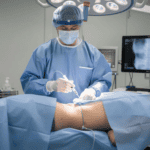
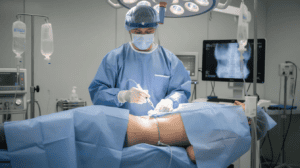
A day-case microdiscectomy is a focused surgical procedure performed under general anaesthetic. Minimally invasive discectomy takes 1 to 2 hours – sometimes less – and the entire hospital visit, from arrival to discharge, typically occupies a single day. The priority throughout is safe, thorough decompression of the compressed nerve.
Pre-operative Assessment and Planning
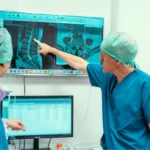
At The UK Spine Centre, every patient undergoes a detailed assessment before surgery: a thorough clinical history, a full neurological examination, and review of high-quality imaging. We use advanced MRI on Harley Street (including 3T MRI and, when needed, CT for bony detail) to pinpoint the exact level, side and nature of the disc herniation.
Pre-operative optimisation is important. This includes medical clearance for anaesthesia, review of medications (particularly blood thinners, which can increase bleeding risk), management of conditions such as diabetes, and smoking cessation advice – all of which improve healing and reduce the risk of complications such as infection or blood clots.
Before the operation, I discuss risks, benefits and realistic expectations in detail with every patient. Written information is provided. We are explicit about what surgery can and cannot achieve – particularly that residual numbness or weakness from long-standing compression may take months to improve, or in some cases may be permanent.
Step-by-Step: How I Perform a Day-Case Microdiscectomy
This is the typical sequence for a lumbar microdiscectomy under general anaesthetic. The procedure follows a precise, reproducible technique refined over thousands of cases:
- Anaesthetic and positioning – the patient is put to sleep and positioned prone on a specialised operating table, with all pressure points carefully protected.
- Small incision – a 2–3 cm incision is made directly over the affected level. Muscles are gently split apart rather than cut, minimising tissue injury.
- Microscopic exposure – a tubular retractor is placed and the operating microscope is used to visualise the spine with magnification and illumination, giving a clear view of the nerve root and disc.
- Creating access – a small window of bone (lamina) and ligament (ligamentum flavum) is removed if needed to reach the compressed nerve. Only the minimum necessary bone removal is performed to maintain stability.
- Disc fragment removal – the offending disc fragment(s) compressing the nerve root are carefully extracted. Healthy disc tissue is preserved wherever possible. This step – the actual decompression – is the most critical portion of the operation.
- Ensuring complete decompression – I check that the nerve root is fully free at all points of potential compression – disc, bone spur, ligament. Incomplete decompression is the primary cause of unsatisfactory outcomes.
- Haemostasis and closure – meticulous control of bleeding, followed by closure in layers with dissolvable sutures. Skin closure may use clips or dissolvable sutures depending on the location.
- Recovery – the patient wakes in the recovery area, usually with their leg or arm pain already significantly reduced. Patients are encouraged to move around immediately after surgery, and walking is possible by the end of the first day post-surgery.
Why Surgical Skill and Decompression Quality Matter
Microdiscectomy is a highly precise operation performed within millimetres of delicate nerves and, in cervical cases, the spinal cord itself. Surgeon experience directly impacts outcomes in several critical ways:
- Identifying all points of compression: disc fragments, bone spurs, and thickened ligaments can all contribute. Missing even a small residual fragment can leave patients with persistent symptoms.
- Judgement on tissue removal: removing too little disc leaves the nerve compressed; removing too much can affect disc height and long-term stability. Experience guides this balance.
- Complication rates: surgeons who perform high volumes of microdiscectomy consistently have lower rates of dural tear, nerve injury, infection and re-herniation.
I have performed thousands of microdiscectomies with excellent results. At The UK Spine Centre, we audit our outcomes – tracking pain relief, return to function, work return, complication rates and reoperation rates – and use this data to continually refine our technique.
“Minimally invasive” should never mean “minimal decompression.” The priority is a fully freed nerve, achieved as gently as possible. A tiny incision is worthless if the nerve remains compressed.
Recovery After Day-Case Microdiscectomy
Recovery after microdiscectomy is usually faster and less painful than most patients expect – particularly compared with older open techniques. Recovery time for minimally invasive surgery is typically 4 to 6 weeks, and most patients notice a dramatic improvement in their nerve pain within the first 24 hours.
The First 24 Hours: Up and Walking
At The UK Spine Centre, the same-day discharge pathway is well established. A UK multicentre study of day-case microdiscectomy demonstrated that same-day discharge is safe, with low complication rates and high patient satisfaction across 134 patients.
What to expect:
- You wake in the recovery area with focused monitoring of your leg or arm pain, movement and sensation. Many patients report that their nerve pain has already significantly improved – sometimes completely gone – at this stage.
- Within a few hours you will be out of bed and walking with support. Patients can go home 1 to 2 days after surgery, though in my practice the majority go home the same day.
- Oral pain medication is used rather than heavy intravenous opioids in most cases.
- Criteria for going home: pain manageable on tablets, able to walk to the bathroom, able to pass urine, and safe support at home.
Some residual back or neck discomfort is expected – this is wound soreness and soft-tissue reaction, not the original nerve pain.
Weeks 1–6: Healing, Activity and Physiotherapy
Realistic expectations for the first six weeks include:
- Back or neck stiffness and local wound soreness that gradually settle over the first 1–2 weeks.
- Walking encouraged from day one, with a gradual increase in distance. Prolonged sitting should be avoided initially.
- Recovery post-discectomy typically involves avoidance of heavy lifting and strenuous activities for several weeks – usually the first 4–6 weeks – while the wound and soft tissues heal.
- Some intermittent twinges or “nerve zaps” as the nerve recovers from months of compression. These are usually temporary and a sign of healing, not damage.
At The UK Spine Centre, we involve specialist physiotherapists early – often within 1–2 weeks of surgery, which is particularly important for patients whose back pain symptoms have been persistent or disabling. Specific exercise plans are provided for recovery, focusing on core stability, posture and safe return to movement and function.
Broad timelines for returning to work:
- Desk-based work: often 1–3 weeks depending on symptoms and commute.
- Light manual work: typically 3–6 weeks. Patients can return to work in 3–6 weeks in most cases.
- Heavy manual or high-impact sport: often 8–12 weeks, guided individually.
A meta-analysis of lumbar microdiscectomy outcomes found that approximately 78% of patients return to work, with a mean time of around 4.8 weeks for those in paid employment.
Long-Term Outcomes and Risk of Recurrence
Most patients experience high rates of leg or arm pain relief, improved mobility and a genuine return to quality of life – particularly when surgery is timed appropriately. One comparative study found that 69% of microdiscectomy patients achieved excellent leg pain scores (VAS 0–3) compared with 50% in the open discectomy group.
However, it is important to be realistic:
- Numbness or weakness that has been present for many months before surgery may recover more slowly, or not completely. Nerves can only repair so far, and longer duration of nerve compression before surgery correlates with less complete recovery.
- Recurrence risk: a small percentage of patients – roughly 10–15% in some series – may experience another disc herniation at the same level. A 5-year randomised trial comparing tubular and conventional microdiscectomy found reoperation rates of approximately 18% versus 13% respectively – not statistically significant, but important for patient counselling.
- Ongoing back pain: discectomy relieves nerve-related leg or arm pain. Mechanical back or neck discomfort from the underlying disc degeneration may persist and requires ongoing pain management and rehabilitation.
We offer long-term follow-up and video consultations for international and out-of-London patients to monitor progress and address any concerns.
Discectomy vs Microdiscectomy vs Anterior Cervical Discectomy vs Other Options
Many patients arrive at my clinic confused by the different labels – discectomy, microdiscectomy, laminectomy, fusion, disc replacement. A straightforward comparison helps clarify when each is appropriate.
Comparing Surgical Options
Criterion | Microdiscectomy | Traditional Open Discectomy | Fusion / Disc Replacement |
|---|---|---|---|
Incision size / tissue disruption | Small incision (2–3 cm), muscle-splitting | Larger incision, more muscle stripping | Larger incision, significant tissue access |
Usual hospital stay | Day case (home same day) | 1–2 nights typically | 1–5 nights depending on complexity |
Primary purpose | Nerve decompression alone | Nerve decompression alone | Decompression plus stabilisation or motion preservation |
Typical return to work | 1–6 weeks depending on role | 5–8+ weeks | 6–12+ weeks |
When recommended | Isolated lumbar or cervical herniated disc with nerve compression | Larger or complex herniations, anatomical constraints | Instability, multi-level degeneration, cervical disc with cord compression |
For most isolated lumbar and cervical disc herniations, day-case microdiscectomy is the preferred option at our centre, though in selected cases we may also consider advanced laser disc surgery as a minimally invasive alternative. It achieves the same decompression as open surgery with less trauma, a shorter hospital stay and faster recovery. Minimally invasive techniques include microdiscectomy and endoscopic discectomy – both designed to achieve nerve decompression through keyhole-sized approaches. |
Larger operations such as lumbar fusion or cervical discectomy and fusion – where a bone graft or cage stabilizes the segment and the vertebrae fuse together – are reserved for specific indications: spinal instability, advanced degeneration, or cervical disc prolapse where an anterior cervical discectomy with fusion or disc replacement is more appropriate. These are not routine treatments for straightforward sciatica.
Non-Surgical Alternatives and When They Are Enough
Conservative treatments for back pain include rest, physical therapies, medication and structured rehabilitation. The key non-surgical options include:
- Targeted physiotherapy: exercise-based rehabilitation focusing on core stability, flexibility and gradual return to function.
- Medications: anti-inflammatories, neuropathic pain agents and appropriate analgesia tailored to the patient.
- Spinal injections: epidural steroid injections or nerve root blocks performed under imaging guidance. The UK NERVES trial found that improvement in disability at 18 weeks was 26.7 points for surgery versus 24.5 for injection – not statistically different – though over half of injection patients did not subsequently require surgery.
Many patients improve with a structured programme over 6–12 weeks, avoiding the need for surgery entirely. Conservative treatments for sciatica include physical therapy and medication, and these should always be tried first unless neurological deterioration demands urgent action.
Surgery is usually advised when these measures no longer control symptoms, when there is progressive nerve damage, or when the impact on quality of life is simply unsustainable.
Common Concerns, Challenges and How We Address Them
Even when surgery is clearly advisable, patients often hesitate – understandably. Fear of spinal surgery, worries about work and family responsibilities, or previous unsatisfactory experiences all play a role. Here are the concerns I hear most often, with honest answers.
“I’m Worried About Having Spine Surgery”
The fear of paralysis or catastrophic injury is natural but, in experienced hands, the actual risk of serious complications from microdiscectomy is very low. General complication rates for microdiscectomy are around 5–10%, and the vast majority of these are minor. Serious nerve injury is rare.
At The UK Spine Centre, safety measures include:
- Advanced pre-operative imaging to plan every step of the procedure.
- Use of the operating microscope for magnified, precise visualisation of nearby nerves and the spinal cord.
- Experienced consultant-led anaesthetic and surgical teams.
- Thorough pre-operative assessment to identify and manage any medical factors that could increase risk – including measures to prevent infection and blood clots.
I always encourage patients to ask direct questions about a surgeon’s volume, complication rates and outcomes. A surgeon who is transparent about their results is usually one worth trusting.
“Will My Pain Really Improve?”
Leg or arm pain caused by nerve compression commonly improves rapidly once decompression is achieved – sometimes immediately on waking from the anaesthetic. Sciatica can result in pain and numbness in the leg, and discectomy directly addresses the mechanical cause.
However, it is important to understand the differences in symptom response:
- Nerve pain (the sharp, radiating sensation down the legs or arms) typically responds best and fastest to surgery.
- Mechanical back or neck discomfort may persist and requires ongoing rehabilitation.
- Numbness or weakness that has been present for a long time may take months to recover, and in some cases residual sensory loss or weakness can be permanent – particularly if compression was prolonged before surgery.
In properly selected patients, success rates are high. The key factors are accurate diagnosis, appropriate timing, and complete decompression.
“How Will I Arrange Work, Travel and Family Life?”
Practical planning makes the experience far smoother:
- Timing: we discuss scheduling surgery around work commitments and caring responsibilities. Day-case surgery minimises disruption – you arrive in the morning, have the operation, and are home by the evening.
- Travel: for international patients and those outside London, we offer comprehensive support including chauffeur services, private recovery rooms, and coordination with local physiotherapists for ongoing rehabilitation. Flying is generally comfortable 1–2 weeks after uncomplicated microdiscectomy, depending on flight duration.
- Driving: most patients can drive within 2–4 weeks, once they can safely operate controls and perform an emergency stop without discomfort.
- Family duties: light household tasks and childcare are usually manageable within 1–2 weeks, with a gradual return to heavier tasks over the following weeks.
Informed planning and the right team make the process considerably smoother and safer.
Conclusion and Next Steps
Discectomy and microdiscectomy are proven, targeted operations to relieve nerve compression caused by a herniated disc. When a disc is compressing a nerve and causing persistent sciatica, arm pain, weakness or numbness that has not responded to conservative treatment, surgery offers a direct solution – and in many cases, rapid relief.
The right time for surgery is defined by symptom severity, duration and impact on your life – not by age or public system constraints. Whether you are 28 or 78, the question is the same: is this nerve compression causing enough harm to justify surgery, and has non-surgical care been given a genuine opportunity to work?
Surgeon experience and quality of decompression are central to success. A discectomy is most commonly performed in the lower back, and the difference between a good outcome and a poor one often lies not in the technology used but in the thoroughness of the decompression and the hands performing it. Minimally invasive, day-case microdiscectomy offers faster, less painful recovery – but only when the nerve is fully freed.
Your next steps:
- Note your key symptoms – their duration, severity, and how they limit your daily life, work and sleep.
- Arrange high-quality spinal imaging (MRI) if you have not already done so.
- Book a specialist consultation – in person or by video – to review your scans and discuss all options.
- Discuss non-surgical and surgical choices openly, including expected outcomes, risks and timelines tailored to your individual situation.
At The UK Spine Centre, we offer a free 15-minute initial discussion and an online “DiagnoseMe” tool for early guidance. We provide fixed-price diagnostic packages, transparent pricing for treatment, and comprehensive post-operative rehabilitation support, all informed by real-world outcomes from our patient stories and recovery journeys. If you are living with sciatica or nerve symptoms that are not improving, I would encourage you to seek a personalised specialist opinion, such as that offered by our Harley Street spine specialists, rather than relying solely on generic online advice.
Additional Resources
- Complete Guide to Slipped Disc – understand how disc herniation develops, when it needs treatment, and how MRI findings relate to your symptoms.
- Understanding Sciatica Without Back Pain – learn why sciatica can occur without significant back pain and what this means for diagnosis and treatment decisions.
- Sciatica Pain Injection Guide – a detailed overview of epidural steroid injections, how they work, and when they may help you avoid or delay surgery.
- Understanding Cauda Equina Syndrome – recognise the warning signs of this rare but serious emergency, and know when to seek immediate help.
- Specialists in Back Pain: Choosing the Right Expert – guidance on selecting a spine surgeon, including what questions to ask about experience, outcomes and approach.
These resources are provided by The UK Spine Centre to support informed, confident decision-making about your spinal health.