London Chiropractic vs Specialist Spine Care: How to Choose the Safest, Fastest Route to Recovery

Introduction
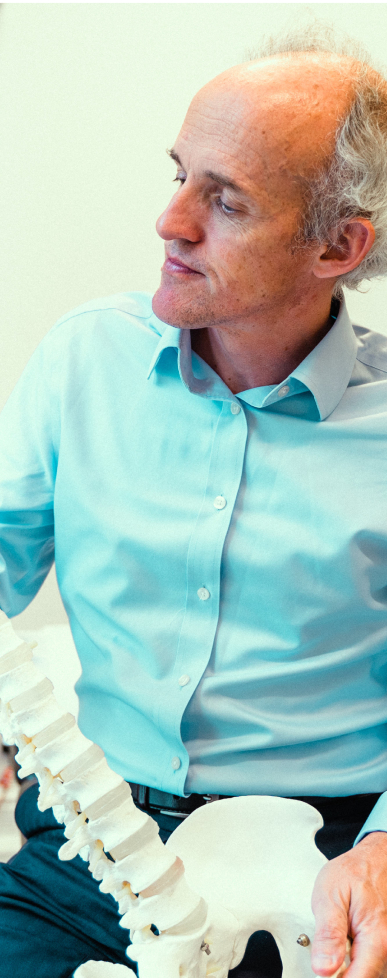
London chiropractic is one of the most common search terms I see patients mention when they first arrive at my clinic, often after weeks or months of worsening back pain, sciatica, or neck stiffness. I am Mr Caspar Aylott, Consultant Spine Surgeon at The UK Spine Centre on Harley Street, and I wrote this article to give you a clear explanation of how London chiropractic care compares with specialist spinal assessment and treatment – and to help you decide the safest, fastest route to recovery for your specific problem.
People search for a London chiropractor for understandable reasons: they want rapid pain relief for symptoms that are disrupting their daily life, they may be facing long NHS waiting times for imaging or referrals, and chiropractic care is widely available through private clinics across the capital. Many expect that spinal manipulation will resolve the root cause of their discomfort quickly. Sometimes it can. But for persistent, severe, or complex back and neck pain, a specialist spinal clinic led by consultant surgeons offers clearer diagnosis, a broader set of treatments, and a stronger safety net – leading to better patient outcomes and faster long-term recovery.
This article will compare what a typical London chiropractic clinic provides with what a consultant-led specialist spine centre delivers. It covers common spine problems, explains how diagnosis and treatment differ between the two, and gives you practical steps to make the right choice. Whether you are dealing with chronic low back pain from desk work, sciatica radiating into your leg, neck tension, or headaches, by the end of this piece you will know exactly when chiropractic treatment is appropriate – and when you need something more.
Here is what you will gain from reading this article:
- Understand what London chiropractic treatment typically involves and when it is appropriate.
- Recognise red-flag symptoms that need urgent medical or surgical assessment, not just manipulation.
- See how a consultant-led spinal clinic like The UK Spine Centre assesses and treats spine problems differently from most chiropractic clinics.
- Learn practical steps to choose the right practitioner in London for your specific back or neck condition.
- Understand how combining selected hands-on therapies with evidence-based spinal medicine can achieve faster, safer recovery.
Understanding Spine Care in London
Spine care encompasses everything from self-management and exercise through manual therapies, injections, and surgery. London offers an unusually wide range of options: chiropractors, physiotherapists, osteopaths, pain clinics, and specialist spinal surgeons all operate within a few miles of each other. This density of choice is both an advantage and a challenge – it can be difficult for patients to identify which practitioner or clinic best matches the severity and nature of their condition. This section provides the foundational context you need: what chiropractors do, what a consultant spine surgeon and multidisciplinary spinal clinic do, and where the essential differences lie.
What London Chiropractic Care Typically Offers
Chiropractic is a regulated musculoskeletal profession focused on diagnosing and treating problems of the spine, joints, and muscles primarily through manual techniques. The core of chiropractic treatment involves spinal adjustments – high-velocity, low-amplitude thrusts designed to restore range of motion in stiff or restricted joints – alongside mobilisation, soft-tissue work, massage, and exercise advice. Chiropractic care is largely a private healthcare service in the UK primary sector, and chiropractic treatment does not typically require a referral from a general practitioner, making it easily accessible.
Common reasons Londoners visit a London chiropractic clinic include new-onset low back pain, neck stiffness from prolonged desk work, tension headaches, minor sports injuries, and postural discomfort. Back pain can develop from muscle strain or poor posture, and neck pain often results from desk posture or digital strain. A typical first visit includes medical history-taking, a physical examination assessing mobility, posture, and sometimes reflexes, possibly in-clinic X-rays, followed by spinal adjustments, soft-tissue work, and home exercise advice. Follow up sessions usually cost £30 to £50 each, with initial chiropractic consultations typically costing between £50 and £100, and a full chiropractic assessment can cost around £210.
All chiropractors in the UK must complete a GCC-recognised degree programme lasting 4–5 years and register with the General Chiropractic Council. Their scope of practice is non-surgical: they cannot prescribe medications, perform surgery, or order advanced imaging such as MRI or CT with the same ease as medical consultants. Chiropractic care can improve spinal alignment and reduce nerve irritation, enhance mobility and reduce muscular tension, and chiropractors use adjustments to restore mobility – but chiropractic is one component of spine care in London, not a replacement for advanced medical or surgical assessment when serious pathology may be present.
What Consultant Spine Surgeons and Specialist Clinics Provide
A consultant spine surgeon is a medically qualified doctor with extensive postgraduate training – typically 10–15 or more years after medical school – in either orthopaedic surgery or neurosurgery, specialising exclusively in disorders of the spine. Neurosurgery run-through training alone spans approximately 8 years (ST1–ST8), and many surgeons undertake additional fellowship training in spinal surgery covering minimally invasive techniques, complex instrumentation, and deformity correction before reaching consultant level.
At The UK Spine Centre, based at The Harley Street Hospital, we offer a structured assessment pathway designed to identify the exact cause of symptoms and determine the safest, most effective treatment. This includes:
- Detailed consultant consultation: in-depth review of symptoms, medical history, lifestyle factors, and all previous treatments including chiropractic care.
- Targeted physical and neurological examination: testing reflexes, motor strength, sensory changes, gait, and balance to assess the nervous system for signs of nerve compression or spinal cord involvement.
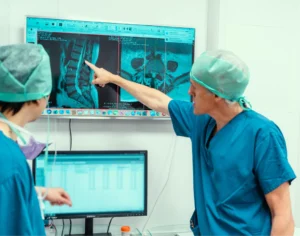
- Same-day imaging: access to high-resolution MRI, CT, X-ray, and EOS imaging at the hospital. MRI provides detailed images of soft tissues including discs and nerves; CT scans are used for quick imaging of bones; EOS imaging offers low-dose radiation for full spinal assessments.
- Full range of evidence-based treatments: from personalised care plans involving advice and physiotherapy, through image-guided spine injections to reduce inflammation and pain, to day-case keyhole surgery when conservative measures fail.
Our multidisciplinary team approach brings together consultant surgeons, pain specialists, specialist physiotherapists, radiologists, and nursing staff to support holistic recovery and relapse prevention. Chiropractic clinics frequently employ multidisciplinary approaches including physiotherapy, but the difference in a consultant-led centre is the ability to identify serious causes – such as cauda equina syndrome, infection, spinal tumour, or unstable fractures – and act on them immediately.
The next section looks more specifically at common problems people seek London chiropractic care for, and how those same problems are assessed and managed in a specialist spinal centre.
When People Search “London Chiropractic”: Common Spine Problems and Options
The typical scenario is familiar: a person with sudden sciatica, ongoing neck pain from remote working, or chronic low back pain is searching “London chiropractic” late at night, looking for a quick solution. They want rapid appointment availability and fast pain relief. This section addresses three of the most common spine problems and outlines the chiropractic approach alongside the specialist spinal approach for each, so you can see the difference in depth and safety.
Lower Back Pain in London Office Workers
Sedentary work in central London – whether in the City, Canary Wharf, or tech hubs – combined with long commuting on the Tube, poor ergonomic setups, stress, and limited movement during the day all contribute to lower back pain. Lower back pain is frequently linked to poor lifting habits, weak core and hip muscles, and sustained poor posture. These factors create paraspinal muscular fatigue, accelerate disc degeneration, and overload facet joints.
A typical chiropractic approach involves spinal manipulation of the lumbar spine, soft-tissue work on tight muscles, and generic posture and exercise advice. Chiropractic care improves spinal function and reduces back pain, and for uncomplicated mechanical back strain this can be helpful. But effective back pain treatment combines clinical intervention and patient education, and back pain treatment often fails due to unaddressed habits and underlying structural problems that manipulation alone cannot correct.
At The UK Spine Centre, the consultant-led approach begins with a detailed history designed to distinguish simple mechanical back pain from disc herniation or spinal stenosis. A physical and neurological examination – testing reflexes, strength, and sensation – checks for nerve involvement. When symptoms persist beyond 6 weeks, involve leg pain, or are accompanied by neurological symptoms, appropriate imaging (MRI rather than plain X-ray) is arranged, often on the same day. This allows us to identify the root cause rather than treating symptoms alone. Rehabilitative exercises are often integrated into care for long-term improvement, and active treatment involves exercises and lifestyle changes tailored to the exact diagnosis.
Sciatica and Leg Pain: Beyond Simple Manipulation
Sciatica is nerve-related leg pain from spinal compression, most often caused by a lumbar disc herniation but also from spinal stenosis or foraminal narrowing. Sciatica often results from disc bulges in the lower back. Pain radiates from the lower back into the buttock and leg, sometimes accompanied by numbness, weakness, or altered sensation. Symptoms of sciatica include lower back pain and referred leg pain, and these symptoms can severely disrupt sleep, mobility, and quality of daily life.
Many people with sciatica search for a London chiropractor hoping that adjustments will provide quick relief. Chiropractic care can help alleviate sciatica symptoms in mild cases, and chiropractic adjustments improve spinal alignment and nerve function. However, treating undiagnosed disc herniation or severe stenosis with repeated high-velocity manipulation without MRI carries risk – it can aggravate symptoms if the herniation is large or the nerve root is severely compressed. Herniated discs can cause sharp pain and stiffness, and herniated discs can result from poor lifting habits or long-term strain.
In my practice, imaging and careful neurological assessment always precede any invasive or forceful treatment in patients with severe sciatica. A specialist centre assessment involves urgent exclusion of cauda equina syndrome (bilateral leg symptoms, saddle anaesthesia, incontinence), same-day MRI to confirm the exact level and size of disc prolapse, and then a staged treatment plan. This may include targeted epidural steroid injections to reduce inflammation, precise physiotherapy, and – only when required – minimally invasive day-case surgery such as lumbar microdiscectomy. A published case series of 134 patients undergoing day-case microdiscectomy showed leg pain VAS scores dropping from approximately 7.7 pre-operatively to 2.9 at 12 months, with under 1% serious complication rate over 30 days (pmc.ncbi.nlm.nih.gov).
Neck Pain, Headaches, and Whiplash
Neck pain and cervicogenic headaches are extremely common in London due to prolonged screen time, smartphone use, chronic stress, and traffic incidents causing whiplash injury. Neck pain can cause stiffness and recurring tension headaches, and chronic stress can exacerbate neck pain symptoms. Poor posture is a common cause of neck pain, and these problems affect movement patterns, sleep, and overall quality of life.
A typical chiropractic approach to neck pain includes cervical spinal manipulation, mobilisation, soft-tissue techniques, massage, and ergonomic advice. Chiropractic adjustments can relieve muscular tension in the neck, and there is evidence of benefit for tension headaches and cervicogenic headaches. However, there are potential safety concerns with high-velocity neck manipulation, particularly in people with unrecognised vascular disease, osteoporosis, or inflammatory conditions. A systematic review found that while serious adverse events after cervical manipulation are rare – estimated at approximately 6.39 per 10 million manipulations (sciencedirect.com) – they do occur, and meta-analysis of RCTs is underpowered to detect very rare events like cervical artery dissection.
The consultant-led approach screens first for serious causes: spinal cord compression (myelopathy), inflammatory arthritis, vertebral artery issues. When neurological signs are present – numbness, weakness in the arms or hands, gait disturbance, hand clumsiness – cervical MRI is arranged. Treatment is graded: posture correction, structured physiotherapy, pain control, and only when structural compression of the spinal cord or progressive neurological deficits are confirmed does surgery such as cervical discectomy and fusion or cervical disc replacement become appropriate.
Neck pain with any arm symptoms or balance problems warrants consultant assessment before any manipulation is considered. The key difference between options is not only in the techniques used, but in the depth of diagnosis and range of treatments available.
How Specialist Spine Care in London Differs from Chiropractic Alone
A common misconception is that the choice is “chiropractor or surgery.” In reality, specialist spine centres offer a broad continuum of non-surgical care long before an operation is ever considered. Surgery is reserved for cases where imaging findings clearly match clinical symptoms and conservative measures have been given a proper opportunity to work – or where neurological compromise demands prompt intervention. This section details the assessment process, available treatments, and how we decide the safest, most effective path to recovery.
The Diagnostic Pathway at The UK Spine Centre
Accurate diagnosis is the foundation of safe, effective treatment. Misdiagnosis – or incomplete diagnosis – can delay recovery for months or years. A patient I see who has been attending a London chiropractic clinic for six months without improvement often has an unrecognised disc prolapse, stenosis, or facet joint problem that manipulation alone cannot resolve.
The typical diagnostic pathway at The UK Spine Centre involves:
- Initial consultant consultation: an in-depth review of symptoms, onset, duration, radiation, neurological symptoms, medical history, lifestyle factors, and all previous treatments including chiropractic care. Patient education is essential for effective rehabilitation, so I ensure every patient receives a clear explanation of their findings.
- Targeted physical and neurological examination: testing reflexes, motor strength, sensory changes, gait, and balance to assess function of the nervous system and identify which structures in the spine are affected.
- Same-day imaging: high-resolution MRI, CT, X-ray, or EOS imaging arranged at The Harley Street Hospital, often completed on the same visit as part of our specialised back pain diagnosis and treatment services. Fixed-price packages are available for diagnosis and imaging, providing cost certainty.
- Clear communication: I explain the findings to the patient, including whether manual therapy is advisable, safe with modifications, or should be avoided entirely. We use validated outcome measures – Oswestry Disability Index, visual analogue pain scales, Neck Disability Index – to monitor progress objectively.
- Streamlined access: tools like our online “DiagnoseMe” questionnaire help pre-screen and triage, identifying whether a patient likely needs imaging or specialist review before they even attend in person.
Step-by-Step Treatment Planning: From Simple to Advanced
Treatment at The UK Spine Centre progresses in stages. Integrated approaches outperform single-modality treatments in rehabilitation, and the principle guiding every plan is personalised care driven by diagnosis, not a fixed number of sessions.
- Education and self-management: personalised advice on activity, ergonomics, pacing, and simple exercises based on the exact diagnosis. This is low-risk and often enough for mild, acute problems.
- Structured physiotherapy and rehabilitation: targeted, supervised exercises focusing on core stability, hip control, postural correction, and flexibility – not generic stretches. This differs from the exercise advice typically given in a London chiropractic clinic because it is individually designed around imaging findings and functional assessment.
- Image-guided spinal injections: nerve root blocks, facet joint injections, or epidurals performed in theatre by pain specialists to reduce inflammation and enable rehabilitation to proceed. Spinal injections are used to treat various spinal conditions; they can provide pain relief and reduce inflammation, may improve mobility in affected areas, and are often part of a broader treatment plan.
- Minimally invasive day-case spine surgery: minimally invasive spine surgery reduces recovery time significantly, typically involves smaller incisions than traditional methods, and minimally invasive techniques can lead to less postoperative pain. Patients often experience quicker return to daily activities after surgery, and minimally invasive surgery often results in lower infection rates. Options include lumbar microdiscectomy, lumbar decompression, or stabilisation. In England, data on over 45,000 posterior lumbar decompression/discectomy procedures showed approximately 17.3% were same-day discharge, and trusts with higher day-case rates did not have worse readmission outcomes (pmc.ncbi.nlm.nih.gov).
- Ongoing rehab and relapse prevention: tailored programmes to maintain gains and prevent recurrence, with video consultations available for patients outside London or abroad.
Manual therapies – including chiropractic-style mobilisation – may be integrated at specific stages under consultant guidance, when safe and clearly indicated by the diagnosis.
London Chiropractic vs Consultant Spine Care: Side‑by‑Side Comparison
The following table summarises the key differences to help you quickly assess which path suits your situation:
Criterion | Typical London Chiropractic Clinic | The UK Spine Centre (Consultant-Led Spine Clinic) |
|---|---|---|
Entry training | 4–5 year chiropractic degree (GCC-registered) | Medical degree + 10–15+ years surgical training (orthopaedics or neurosurgery) + spinal fellowship |
Ability to order and interpret MRI/CT/EOS | Limited; usually refers via GP or private imaging service | Full access to same-day MRI, CT, X-ray, EOS at Harley Street Hospital; consultant interpretation |
Range of treatments | Spinal manipulation, mobilisation, soft-tissue work, exercise advice, massage | All of the above plus spinal injections, medications, minimally invasive surgery, complex surgery, structured rehab |
Management of red-flag conditions | Must recognise and refer to GP or A&E | Immediate recognition, urgent imaging, direct hospital admission and surgical intervention if needed |
Typical treatment goals | Short-term symptom relief, improved motion, reduced tension | Long-term structural and functional recovery, treating root cause, relapse prevention |
Suitability for complex pathology | Limited: not designed for stenosis, large disc prolapse, deformity, post-surgical problems | Complete spectrum: from spinal stenosis and slipped discs to deformity, revision surgery, and the ageing spine |
Cost transparency | Initial consultations £50–£100; follow up sessions £30–£50 | Fixed-price diagnostic packages; clear pricing for injections and surgery |
Multidisciplinary team | Usually chiropractor alone, sometimes with physiotherapy | Consultant surgeon, pain specialist, specialist physiotherapists, radiologists, nursing team |
Chiropractors can be part of the team for selected cases, but a consultant-led centre offers a safer umbrella when diagnosis is uncertain, symptoms are severe or worsening, or the body is not responding to manual therapy alone. |
Common Pitfalls When Choosing London Chiropractic – and How to Avoid Them
Many patients understandably try the quickest, nearest, or most affordable option first. Chiropractic care in London is widely available through private clinics and wellness centres, and access is fast. But speed must not come at the cost of safety. This section offers practical guidance to help you avoid common pitfalls that can prolong suffering or miss serious problems.
Problem 1: Treating Undiagnosed Red Flags with Repeated Manipulation
Red-flag symptoms include new bladder or bowel dysfunction, saddle numbness, rapidly worsening weakness in the legs or arms, unexplained weight loss, a history of cancer, fever, recent major trauma, or severe night pain unrelieved by rest. These symptoms can indicate conditions such as cauda equina syndrome, spinal infection, or tumour – where hours matter.
Repeated spinal manipulation in these scenarios is unsafe and may delay life-saving surgery or urgent medical treatment. Pain signals from these conditions differ fundamentally from mechanical back pain, and misinterpreting them as simple joint stiffness can have devastating consequences.
Solution: if you experience any red-flag symptoms, seek immediate emergency assessment at an A&E or consultant spinal clinic. Manipulation should be avoided until serious pathology has been excluded by MRI/CT and medical assessment. Knowing when to get an MRI for back pain can be the single most important decision in your recovery.
Problem 2: One‑Size‑Fits‑All Treatment Plans
Some London chiropractic clinics sell long prepaid packages of identical treatments – 10, 20, or more sessions of the same adjustments – irrespective of diagnosis or response. Clinics vary greatly in techniques, often offering both traditional and modern approaches, but the challenge arises when the plan is fixed rather than responsive to how the patient’s body is progressing. If pain persists despite several sessions, or symptoms are worsening, this should trigger re-evaluation and likely imaging and consultant review, not simply more of the same.
Solution: seek personalised care driven by diagnosis and measurable outcomes. Ask your chiropractor what objective measures they use to track improvement. If progress has stalled, request imaging or a specialist opinion rather than continuing unchanged treatment.
Problem 3: Delaying Definitive Treatment for Months or Years
I regularly see patients who have cycled through multiple manual therapists – chiropractors, osteopaths, massage therapists – for years while underlying structural problems such as significant spinal stenosis, large disc prolapse, or high-grade spondylolisthesis have slowly worsened. Spinal stenosis narrows the spinal canal, causing nerve compression, and spinal stenosis can result from age-related changes in the spine. Symptoms of spinal stenosis include pain, numbness, and weakness – and delay means progression of nerve damage, muscle wasting, permanent numbness, and increasing complexity of eventual surgery, particularly in the context of ageing and back pain.
Solution: seek a consultant opinion based on concrete timeframes:
- Pain or sciatica not improving after 6–8 weeks of good conservative care.
- Any deterioration in strength, sensation, or walking distance.
- Recurrent episodes disrupting work or sleep several times a year.
The aim is not to dismiss chiropractic but to place it within a safer, more effective overall care pathway – one where the diagnosis is clear, the treatment is appropriate, and the health outcome is the best achievable, as exemplified by our world leading London spine clinic in Harley Street.
Conclusion and Next Steps
London chiropractic can help with some straightforward musculoskeletal problems – short-lived mechanical back or neck pain without neurological signs, tension, stiffness, and postural discomfort. For these issues, a chiropractor may be a reasonable first step, particularly when there are no red flags and symptoms are improving.
However, for persistent, severe, or complex spinal symptoms – chronic pain lasting more than 6 weeks, sciatica with leg weakness or numbness, neck pain with arm symptoms or balance problems, or any red-flag presentation – advice from a qualified consultant spine surgeon offers a clearer diagnosis, a broader set of treatments, and a stronger safety net. The combination of advanced imaging, a multidisciplinary team, evidence-based non-surgical options, and access to minimally invasive surgery when truly needed consistently leads to better patient outcomes and faster recovery.
Immediate next steps:
- Check your symptoms for any red flags (bladder/bowel changes, saddle numbness, progressive weakness, unexplained weight loss, fever, night pain) and seek urgent help if any are present.
- If your pain has lasted more than 6 weeks, or involves leg or arm symptoms, arrange a specialist spinal assessment, ideally with access to same-day MRI.
- Use The UK Spine Centre’s online “DiagnoseMe” assessment or book a free 15-minute video consultation to discuss whether you need imaging or specialist treatment. Video consultations are available for chiropractic care and specialist consultations alike, providing convenience for patients seeking care and helping reduce travel time.
- If you already see a chiropractor, consider sharing your MRI reports and consultant’s letter with them so any manual therapy is integrated safely into your overall plan.
You may also wish to explore related topics: minimally invasive day-case spinal surgery, spinal injections, rehabilitation programmes, and international or VIP patient pathways for those travelling to London.
Additional Resources and FAQs about London Chiropractic and Spine Surgery
This section provides concise answers to common questions and signposts further help.
FAQ 1 – Should I see a London chiropractor or a spine surgeon first?
See a consultant spine specialist first if you have leg or arm symptoms, weakness, numbness, balance issues, previous cancer, or pain lasting longer than 6–8 weeks. These presentations require accurate diagnosis with advanced imaging before any forceful treatment is considered, and a consultant can assess factors that a chiropractor’s training does not cover.
A chiropractor may be reasonable as a first step for simple, short-lived back or neck pain without red flags, provided they are willing to refer on if you are not improving within a few weeks. Many clinics offer specialised programmes for pregnant women and children as well, and clinics provide different techniques – but if discomfort persists, do not delay seeking a consultant opinion.
FAQ 2 – Is spinal manipulation safe if I have a disc herniation or spinal stenosis?
Safety depends entirely on the severity and exact nature of the pathology, confirmed with MRI. High-velocity manipulation near a significantly compressed nerve or narrowed spinal canal can in some cases aggravate symptoms. Herniated discs can cause sharp pain and stiffness, and symptoms of herniated discs include lower back pain and sciatica – manipulation without knowing the size and position of the herniation introduces unnecessary risk.
At The UK Spine Centre, decisions about manual therapy are made after reviewing imaging and neurological findings. Often, gentler mobilisation or structured rehabilitation is preferred over high-velocity adjustments. Treatment options for spinal stenosis include chiropractic adjustments in mild cases, but moderate to severe stenosis typically requires more targeted intervention such as lumbar fusion surgery when instability or advanced degeneration is present.
FAQ 3 – How quickly can I be seen and treated at The UK Spine Centre in London?
Private consultations at our Harley Street clinic are often available within a few days, sometimes the same week. We can arrange same-day MRI and provide a diagnosis and complete treatment plan on the same visit for many patients. Non-surgical treatments such as spinal injections can typically be arranged within days. For urgent cases requiring minimally invasive day-case surgery, slots are prioritised based on clinical need.
Fixed-price packages are available for international patients, and clinics provide video consultations for convenience – our team can conduct an initial assessment remotely before you travel. International patients receive tailored care, and insurance approvals for chiropractic care often require verification of registrar credentials, so our administrative team can support you with documentation.
FAQ 4 – Can I combine chiropractic treatment with care at The UK Spine Centre?
Yes, in selected cases, chiropractic or osteopathic techniques may be safely combined with medical and surgical care, but this should always be guided by an accurate diagnosis and consultant advice. The principle is that every member of the care team understands the complete clinical picture – including imaging findings and neurological status – so that no conflicting or risky interventions occur.
I encourage patients to bring reports and treatment notes from their chiropractor so all practitioners can coordinate. This creates a genuinely integrated approach where manual therapy supports rather than undermines the recovery pathway.
How to Contact The UK Spine Centre
The UK Spine Centre is located at The Harley Street Hospital in central London, easily accessible from major London terminals and airports. We offer in-person consultations, video consultations for UK and international patients, and VIP and international patient services. VIP services include private rooms and chauffeur service, and VIP services aim to enhance patient comfort and experience throughout the treatment journey. In older patients, this can be particularly important when managing fragile conditions such as osteoporotic vertebral compression fractures.
Whether you are considering London chiropractic care, have already tried it without sufficient improvement, or are facing a new or worsening spinal problem, contact the clinic to discuss your individual symptoms. A consultant-led assessment may be more appropriate than – or complementary to – London chiropractic care alone, and our patient stories illustrate the difference that accurate diagnosis and specialist treatment can make to recovery and quality of life.